
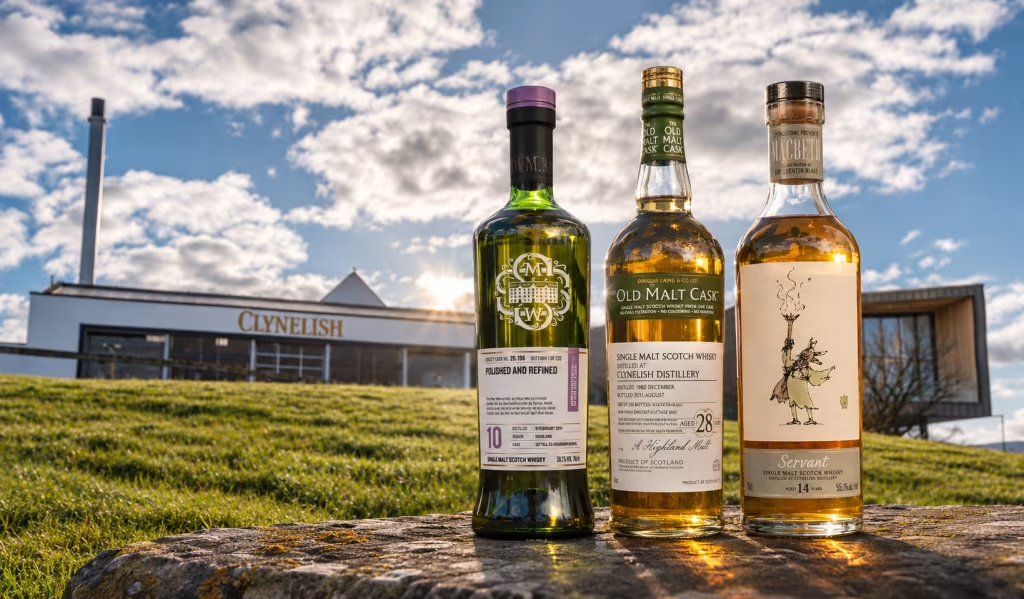
Our mission to clear some space in the sample drawers continues. After a few sherried Bimber releases, we’re heading back to Scotland, this time to the Northern Highlands, for three independently bottled Clynelish.
Today’s line-up features a 10-year-old from the Scotch Malt Whisky Society (26,186), a 14-year-old named The Servant from Elixir Distillers, and a considerably older Clynelish distilled in 1982 and bottled in 2011 by Douglas Laing.
Three independent bottlers, three different generations of Clynelish, and an opportunity to see how much of that signature waxy character comes through in each expression. Let’s get the glasses out.
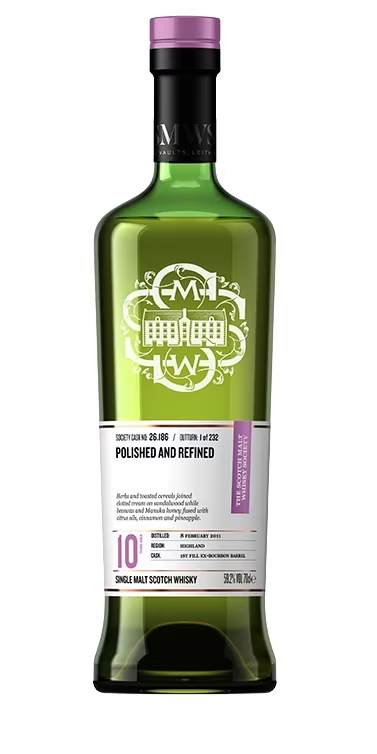
Clynelish 2011 Polished and Refined SMWS 26,186 (2022) Review.
Distilled on 8 February 2011, this Clynelish was independently bottled by the Scotch Malt Whisky Society under the cask reference 26,186 and named ‘Polished and Refined’. Aged for 10 years in a first-fill ex-bourbon barrel, it was bottled at its natural cask strength of 59.2% ABV, without chill filtration or added colouring. The release was limited to 232 bottles and featured in the February 2022 SMWS outturn, under the Society’s ‘Sweet, Fruity & Mellow’ flavour profile. The exact bottling date has not been established.
Colour:
Jonquille.
Nose:
Neat: Sweet and fruity, with peaches, blackberries, plums and a little pear. Vanilla custard, honey and fruit yoghurt bring a creamy character, while toasted cereals and almonds emerge in the background. There are also some fresher, slightly grassy notes, alongside lime zest, flowers and a touch of fragrant wood. Quite gourmand, with a noticeable bourbon cask influence.
With water: More oily and waxy, with candle wax and coconut. Freshly cut wood, cinnamon and nutmeg emerge, alongside malt and dried herbs. Some creamy lime and sweet biscuit notes develop as well. The alcohol is still quite aggressive on the nose.
Palate:
Neat: Rather more assertive than the nose suggests, with black pepper, chilli, ginger and a little clove. Vanilla, honey and toasted nuts gradually bring some sweetness, accompanied by orange peel and passion fruit. There is a pleasant waxiness to the texture, although the alcohol and oak tannins are quite noticeable at full strength.
With water: Softer, juicier and considerably fruitier. Pineapple, orange and lemon come through, alongside honey and a little floral freshness. The waxy character remains, while the spices become less aggressive. Water seems to bring a better balance between fruit, wood and alcohol.
Finish:
Long, with honey, liquorice, mint and lingering spices. There is a slightly nutty, woody dryness, reminiscent of grape skins, particularly after dilution. Some waxy citrus remains in the background.
Comments:
I quite like this young Clynelish, lively and spiritely, even though its youth is quite noticeable with a bit of alcohol heat. Unfortunately, reduction does not tame the heat on the nose, but the palate gets easier.
Rating: 6/10
Clynelish 14-year-old The Servant Elixir Distillers (2024) Review
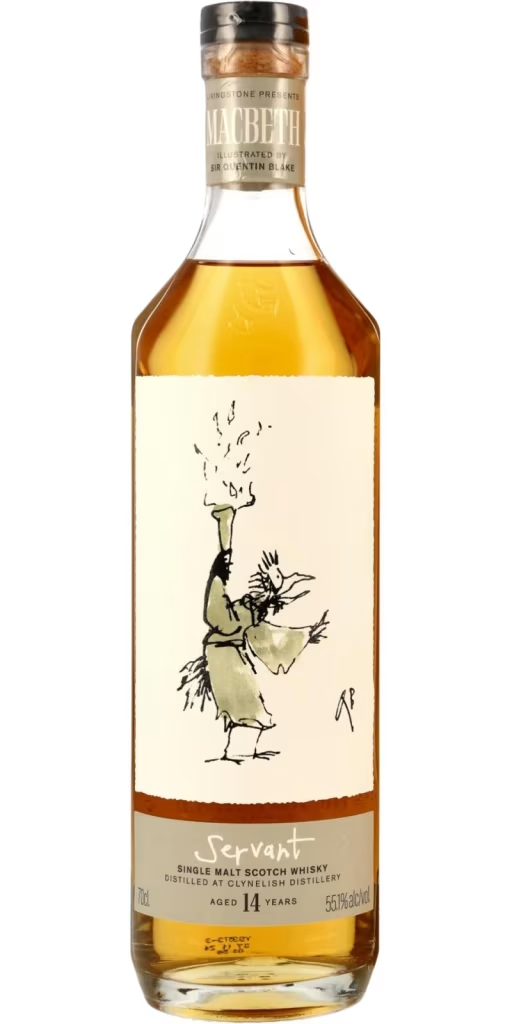
Part of the Macbeth Collection, a series of whiskies inspired by the characters of Shakespeare’s tragedy, The Servant is a 14-year-old Clynelish independently bottled by Elixir Distillers for Livingstone Rare. It belongs to the second act of the collection, within The Household series, with label artwork by Sir Quentin Blake.
We’ve already reviewed a few whiskies from the second act in a previous article featuring a Jura 17-year-old, a Glentauchers 27-year-old and a Ben Nevis 28-year-old. We’re returning to the collection today with one of its younger and more affordable releases.
Bottled on 4 November 2024, this Clynelish spent its entire 14-year maturation in first-fill ex-bourbon barrels. It was bottled at 55.1% ABV, without chill filtration or added colouring, with an outturn of 1,600 bottles. The exact distillation dates and number of casks used have not been disclosed. About €150 in Europe and £140 in the UK for a bottle.
Colour:
Jonquille.
Nose:
Neat: Fresh, fruity and waxy, with lemon peel, grapefruit and bergamot. Vanilla, honey and butterscotch bring some sweetness, alongside ripe bananas and pears. There is a slightly grassy and mineral character, with damp chalk, dried herbs and a faint maritime influence. A little fresh ginger and toasted oak complete the picture.
With water: More herbal, with fennel, dill and a little caraway. The grassy notes become slightly earthier, reminiscent of hessian, while the citrus and vanilla remain prominent.
Palate:
Neat: Creamy and slightly oily, though less waxy than the nose suggests. Lemon, grapefruit and green orange mingle with pears, honey and vanilla. There is a pleasant mineral character, alongside some sweet malt and butterscotch. Ginger and pepper gradually build, bringing a slightly sharper edge to the fruit and sweetness.
With water: Softer and creamier, with lemon curd and a little meringue. The citrus becomes less sharp, while the vanilla and sweeter notes come through more easily. Some peppery warmth remains, but the overall balance improves.
Finish:
Medium in length, with citrus peel, honey, sweet malt and a little cocoa. The sweetness gradually fades, leaving ginger, pepper and a slightly drying oakiness, with some lingering grassy and waxy notes.
Comments:
This Clynelish 14-year-old from the Macbeth series is a real step up over the SMWS one. The four additional years of maturation tamed the youthful heat and brought a pleasant mineral and herbal character, without hiding or overwriting the characteristics we expect from a Clynelish. This is pretty good!
Rating: 7/10
Clynelish 1982 Douglas Laing (2011) Review
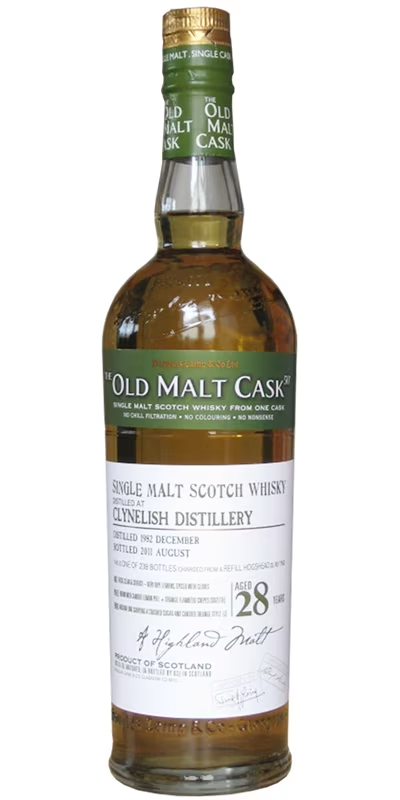
Distilled in December 1982 and independently bottled by Douglas Laing in August 2011 as part of its Old Malt Cask range, this Clynelish spent 28 years maturing in a single refill hogshead, cask reference DL 7553. It was bottled at 50% ABV, without chill filtration or added colouring, with an outturn of 238 bottles in 70 cl format.
The bottling strength corresponds to the standard 50% ABV traditionally used for the Old Malt Cask range, rather than being explicitly identified as natural cask strength. This release is sold out.
Colour:
Old gold.
Nose:
Neat: Lovely beeswax and honey, followed by mandarin, lemon peel and ripe apples. There is a delicate grassy smokiness, alongside dried hay and a little mustard seed. With time, it becomes richer and more honeyed, developing earthy, mineral and slightly rooty notes. Some floral aromas and gentle oak in the background. Rather fresh and expressive for a 28-year-old whisky.
With water:
Palate:
Neat: Oily and waxy, with candied apricots, oranges, lemon and a little pineapple. Honey brings some sweetness, while mustard, black pepper and cloves provide a spicier edge. There is a pleasant mineral character and a faint herbal smokiness. The arrival is rather powerful, but the intensity gradually decreases, becoming grassier and slightly bitter. The oak remains surprisingly restrained.
With water: Water improves both the texture and the balance, giving the whisky more body rather than thinning it out. Lemon becomes more prominent, alongside aromatic herbs, verbena and herbal liqueur. The palate feels fuller and more expressive.
Finish:
Medium to long, with cooked orchard fruits, citrus peel and lingering waxiness. Pepper, dried herbs and a little earthy smoke gradually take over, accompanied by gentle oak bitterness. A slightly floral and waxy aftertaste.
Comments:
Compared with the two younger Clynelishes reviewed above, the SMWS 26,186 and The Servant, this 1982 offers a particularly interesting contrast. Both younger whiskies were matured in first-fill bourbon casks, whereas this one spent nearly three decades in refill wood. Despite twice the maturation time of The Servant, it shows a considerably less obvious oak influence, with more earthy, mineral, herbal and waxy characteristics.
Interestingly, all three seem to retain Clynelish’s characteristic waxiness, but the 1982 appears to express it in a rather different way, with less vanilla and gourmand sweetness. And a detached elegance.