There are whisky labels that appear to tell you almost nothing, and others that seem extraordinarily precise. Refill sherry hogshead certainly belongs to the second category. Three words, and apparently we know the cask. We know its size – or at least its general format. We know something about what it held before. And we know that it has been used before.
Easy.
Except that we still don’t know what kind of oak it is. We don’t necessarily know what kind of sherry was involved, how long it held it, how long its previous whisky maturation lasted, whether this is its second Scotch fill or its fourth, whether it was rejuvenated somewhere along the way, or exactly how active the wood remains.
Suddenly, ‘refill sherry hogshead’ doesn’t look quite so precise. So what does refill actually tell us? And perhaps more importantly, what doesn’t it tell us?

First fill doesn’t mean a new cask.
We should probably start with the terminology because first fill is wonderfully capable of meaning something other than what it appears to mean.
Imagine an American oak barrel.
It is made from new oak, charred and filled with bourbon. Under American rules, bourbon must be matured in new charred oak containers, so once that bourbon has been emptied, the distillery cannot simply refill the barrel and use it again for another bourbon.
The barrel comes to Scotland.
A Scottish distillery fills it with new make spirit.
That is its first fill.
Not its first ever fill.
Its first fill with Scotch.
The cask has already spent years holding another spirit and has already had a substantial amount of material extracted from its wood. Nevertheless, in Scotch whisky terminology, this is a first-fill ex-bourbon barrel.
Once that Scotch is removed and the cask is filled with Scotch again, we enter refill territory.
Simple enough.
Mostly.
What does ‘refill’ mean?
In ordinary Scotch whisky usage, a refill cask is one that has already been used to mature Scotch whisky.
So a simplified life story might look like this:
New American oak → bourbon → first-fill Scotch → refill Scotch
Or:
New oak → sherry seasoning → first-fill Scotch → refill Scotch
The important point is that refill counts the cask’s use within Scotch maturation rather than every liquid that has ever been inside it.
This creates the slightly ridiculous situation where the second Scotch whisky to enter an ex-bourbon barrel may actually be the third alcoholic liquid to occupy the cask.
And even the vocabulary after that isn’t completely standardised.
Some producers and writers distinguish between second fill and later refill casks. Others use refill more broadly for any cask that has already matured Scotch at least once.
So if a label merely says ‘refill’, I would resist the temptation to translate that automatically into ‘second fill’.
It may be.
But the word alone doesn’t necessarily tell us.
And the Scotch Whisky Regulations don’t step in to settle the terminology for us. They require Scotch to mature in oak casks no larger than 700 litres, while the Product Specification places further restrictions on what those casks may previously have been used to mature. Neither gives us a convenient legal definition of ‘refill’ for the bottle label.
It is useful industry information.
It just isn’t a complete cask biography.
Why does the number of fills matter?
Because the cask changes every time we use it.
Whisky maturation is not simply whisky absorbing the flavour of whatever liquid happened to be in the barrel before it.
The spirit interacts with the oak itself.
Alcohol and water penetrate the wood and extract compounds created or modified by seasoning, toasting and charring. Among them are compounds associated with vanilla, coconut, spice, tannin and colour.
At the same time, the cask can subtract things from the spirit, while oxygen and time enable further reactions.
And the previous contents matter too.
But a cask doesn’t have an infinite supply of extractable compounds.
Each fill changes it.
Research into repeated use of ex-bourbon wood shows that some extractives fall considerably between the first Scotch fill and later fills. Different groups of compounds are depleted at different rates, which is important: a refill cask isn’t simply a first-fill cask with its volume knob turned down.
Its contribution can be different in composition as well as intensity.
That is a much more interesting way to think about refill maturation.
Refill does not mean exhausted.
This is probably the misconception I most want to get rid of.
First fill sounds premium.
Refill sounds second-hand.
And whisky marketing has trained us rather efficiently to become excited by phrases such as:
FIRST FILL OLOROSO SHERRY BUTT
while:
REFILL HOGSHEAD
doesn’t exactly make the heart race.
But a less active cask isn’t necessarily a worse cask.
Sometimes it is precisely the cask you want.
A highly active cask can give colour and oak-derived flavours relatively quickly. That can be desirable.
It can also overwhelm the spirit.
If I have a fruity, waxy, mineral, smoky or otherwise characterful new make and want to mature it for twenty or thirty years, putting it into extremely active wood may not be the obvious route to preserving those characteristics.
A refill cask works more slowly.
That can allow more of the distillery character to remain visible while still providing the interaction with oak required for maturation.
Bruichladdich, for instance, explicitly describes later-fill casks as useful for long maturation because they take much longer to dominate the distillate.
That seems a much better way to think about them.
Not:
first fill = good; refill = cheap.
But:
How much cask influence do I actually want?

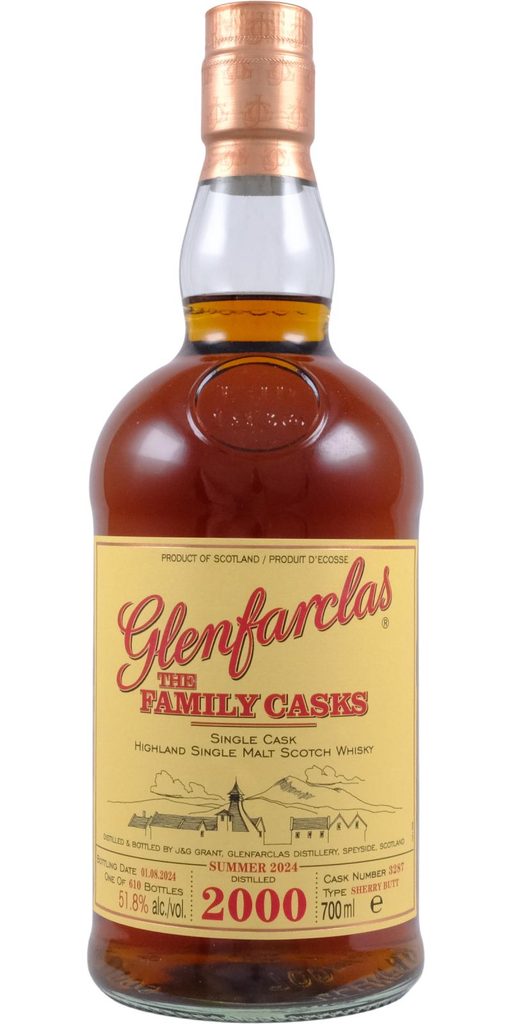
If you remember this Glenfarclas 1979 The Family Casks from this review, the usage of a fourth fill cask allowed the distillate character to truly shine and give a look at the Glenfarclas spirit we were not used to.
The age of the whisky doesn’t tell you the age of the cask.
Now things become messier.
Imagine two bottles. Both are 20 years old. Both say refill bourbon hogshead.
Those descriptions could conceal very different cask histories.
Cask A may previously have matured Scotch for eight years.
Cask B may previously have matured Scotch for twenty-five.
Even if both are technically on the same numbered fill, the amount already extracted from the wood need not be remotely similar.
Or perhaps one cask’s previous Scotch fill lasted twelve years and the other’s lasted thirty. Perhaps one spent years as a barrel before being broken down and rebuilt as a hogshead.
Perhaps one was particularly active to begin with.
Perhaps one had already become relatively neutral.
The number of fills is therefore only part of the story.
Duration matters too.
A second-fill cask after a short first maturation isn’t necessarily equivalent to another second-fill cask whose first Scotch spent decades inside it.
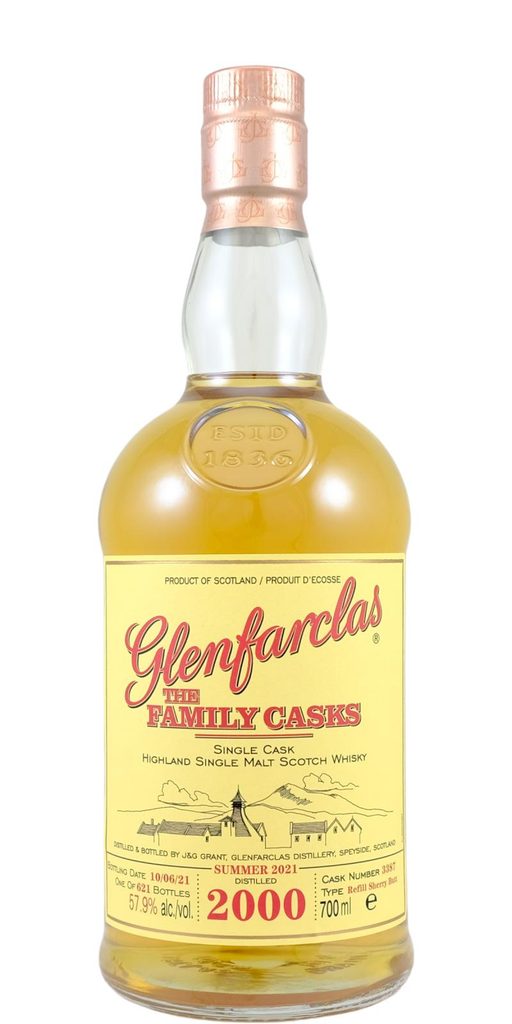
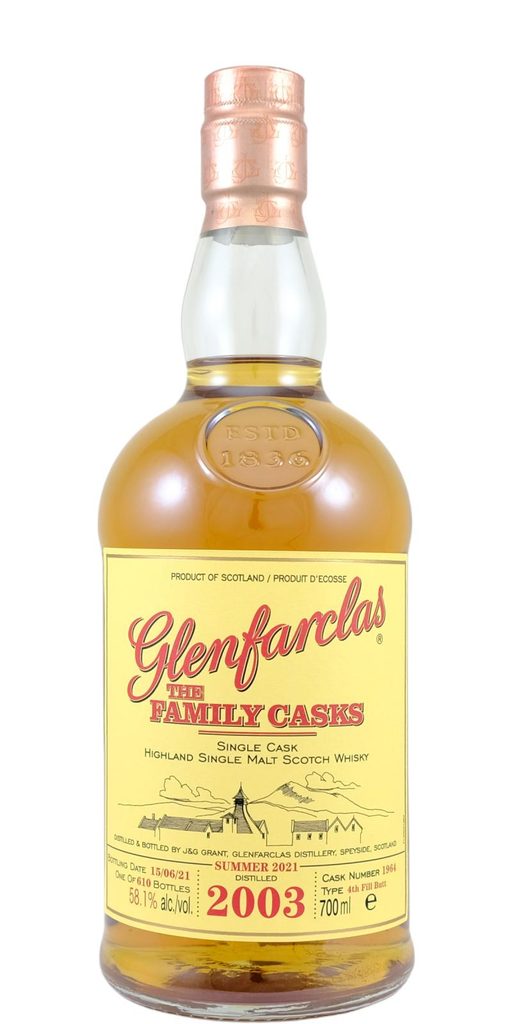
The label doesn’t usually tell you any of that. Look at the three Glenfarclas from above. One is a refill sherry butt, and another one is a fourth fill sherry butt. Which one looks like it was less active than the other one? See? And the fourth fill one was even a three years younger whisky.
And ‘refill sherry’ contains another ambiguity.
Sherry makes everything more complicated.
As I discussed in the old-bottlings article, historical sherry casks and modern whisky-industry sherry casks do not necessarily come from the same supply chain.
Historically, the Scotch industry had access to transport casks in which sherry had been shipped to Britain. Today, sherry casks for Scotch are generally produced and seasoned deliberately for whisky maturation.
So when a label says:
refill sherry hogshead
what exactly is being refilled?
Suppose a new oak cask was seasoned with oloroso for eighteen months and then filled with Scotch for twelve years.
The Scotch is removed.
The cask is filled with Scotch again.
Now it is a refill sherry cask.
The sherry itself was there two whisky maturations ago.
And after the first Scotch spent twelve years extracting compounds from the oak and whatever influence remained from the seasoning wine, how much of the character of the second whisky should we attribute specifically to ‘sherry’?
There is no universal answer.
This is why I find expressions such as sherry cask useful but dangerously easy to over-interpret.
They describe part of the cask’s history.
They aren’t a flavour recipe.
A hogshead may have had another life too.
The word hogshead creates another illusion of precision. A hogshead is a cask format, commonly somewhere around 250 litres in Scotch whisky use. It doesn’t necessarily describe the form in which the cask began its life.
Ex-bourbon barrels can be dismantled and their staves rebuilt into larger hogsheads, sometimes with additional staves.
So:
refill bourbon hogshead
does not necessarily mean that an American bourbon producer once filled a 250-litre hogshead with bourbon.
In fact, bourbon’s required new charred oak container is most famously the roughly 200-litre American Standard Barrel. The hogshead may be the Scottish chapter of the cask’s story rather than its original shape.
Again, the label isn’t wrong. We are simply asking it to tell us something it never claimed to tell us.
How many times can you refill a cask?
There is no magical number.
You will sometimes encounter statements that a cask can be used three times, four times, or for forty or fifty years.
Those can be useful rules of thumb. They aren’t expiry dates. What matters is whether the cask is still doing the job required of it.
A cask that has already seen several fills will generally become progressively less active. Eventually it may contribute so little that continuing to use it without intervention is no longer useful for the desired maturation programme.
But ‘exhausted’ doesn’t mean the oak has somehow ceased being oak. The cask can sometimes be rejuvenated.
The cask can get a second life.
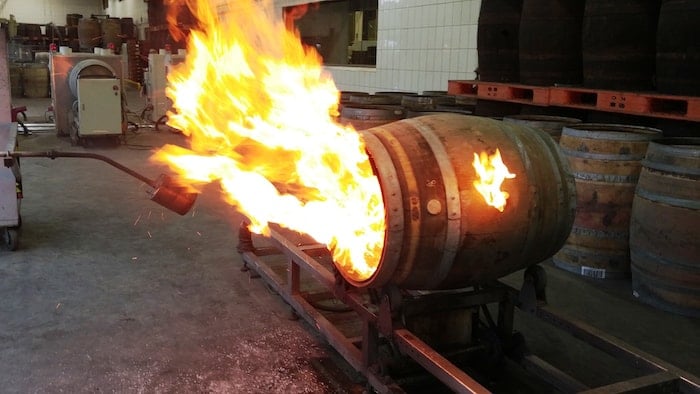
Traditional cooperage practices can include de-charring and re-charring casks, and current Scotch verification guidance explicitly recognises charring and de-charring as permitted traditional practices.
The principle is fairly intuitive.
Remove the exhausted inner surface, expose less-depleted wood beneath it, then apply heat again. Suddenly a tired refill cask can become much more active.
Which creates an interesting question:
Is a rejuvenated refill cask still meaningfully the same thing, from a flavour point of view, as an untouched refill cask of the same nominal fill number?
Obviously not.
Its previous history still matters, but the treatment has altered the surface with which the whisky interacts.
This is another reason why counting fills alone can only take us so far.
Refill is not the same as rejuvenated.
This distinction is worth making explicitly.
A refill cask has been used before.
A rejuvenated cask has been treated to restore some of its activity.
Those descriptions can overlap.
A refill cask can be rejuvenated and then filled again.
And then we have processes such as STR – shaved, toasted and re-charred – developed by the late Dr Jim Swan, most famously with wine casks.
At that point, simply knowing what liquid the cask once held tells you increasingly little about the wood surface now interacting with the whisky.
This is why cask terminology becomes dangerous when we treat each word as a flavour descriptor.
‘Refill’ is history.
‘Recharred’ is treatment.
‘Sherry’ is previous use or seasoning.
‘Hogshead’ is format.
‘European oak’ is a wood species – or, more accurately, a broad family of oak species if the label doesn’t get more specific.
Each answers a different question.
Can a refill cask still give lots of colour?
Absolutely.
The lazy mental model is:
first fill = dark
refill = pale
It often works just well enough to be dangerous.
First-fill casks generally have more readily extractable material and can impart colour more quickly.
But colour development depends on much more than fill number.
Oak species matters.
Previous contents and seasoning matter.
Toasting and charring matter.
How long previous fills spent in the cask matters.
How long the current whisky spends there matters.
Rejuvenation matters.
Warehouse conditions matter.
And, once the whisky has been bottled, plain caramel colouring may legally be used to adjust the colour of Scotch anyway.
So a pale whisky isn’t proof of an exhausted cask.
A dark whisky isn’t proof of first fill.
And neither tells you whether the whisky is any good.
We do seem unusually determined to judge whisky by looking at it.
What about refill bourbon?
This is perhaps where refill casks receive the least attention because ex-bourbon wood is so common in Scotch that it can almost disappear into the background.
Yet refill bourbon casks can be wonderful for exactly that reason. A first-fill ex-bourbon barrel can provide obvious vanilla, coconut, sweetness and oak spice.
On subsequent fills those contributions generally become less assertive. What remains more exposed is the spirit.
Fruit.
Cereal.
Wax.
Minerality.
Peat.
Industrial notes.
Whatever the distillery happened to put there in the first place.
For somebody trying to understand distillery character, refill bourbon can, therefore, be far more interesting than the darkest first-fill sherry butt in the warehouse.
That doesn’t mean refill bourbon is intrinsically better. It means the cask and spirit are doing different amounts of talking.
And sometimes I want to hear the distillery.

This Clynelish 2009 bottled in the Old Malt Cask series by Hunter Laing, reviewed here, was particularly interesting, because the refill cask allowed Clynelish’s characteristic waxiness and fruitiness to take centre stage, with pineapple, peaches, citrus, honey and candle wax, rather than excessive oak influence.
First fill isn’t automatically better either
This deserves saying explicitly because the terminology itself creates a hierarchy.
First.
Second.
Refill.
It sounds like wine pressings.
Surely you want the first one.
But maturation is about balance, not maximum extraction.
A first-fill cask can be magnificent.
It can also give you too much oak, too much tannin, too much wine influence or simply too much cask.
Anyone who has tasted a young whisky from an extremely active first-fill wine or sherry cask will know that youth and colour aren’t mutually exclusive.
Nor are darkness and maturity synonymous.
A refill cask may need more time.
That can be a disadvantage if you are trying to release whisky quickly.
It can be an enormous advantage if you have the stocks and patience for long maturation.
Ardnamurchan provides a neat practical example: in its private-cask programme, it anticipates that most first-fill casks will mature within ten years, while it provides longer warehousing arrangements for refill casks because they are expected to take more time.
The slower cask isn’t failing.
It is doing a different job.
What the label still hasn’t told us.
Let’s return to my Kintra Balblair.
Refill sherry hogshead.
What can I reasonably say?
It is a hogshead.
It has a history associated with sherry.
It has already been used for Scotch maturation before this fill.
And that’s useful information.
What can’t I establish from those words alone?
The precise oak species.
The type of sherry.
How long the cask was seasoned with sherry.
Whether it began life in that format.
How long its previous Scotch fill lasted.
Whether there was more than one previous Scotch fill.
How active the cask was when Balblair entered it.
Its exact capacity.
Its complete cooperage history.
Whether it had been rejuvenated at some earlier stage, unless the bottler tells me.
That isn’t a criticism of the label.
If we demanded the complete biography of every cask, we’d need bottles the size of advertising columns.
It is simply a reminder that cask descriptions are summaries.
So what does ‘refill’ actually tell us?
Less than some people assume.
More than nothing.
It tells us that the cask has already participated in Scotch whisky maturation rather than being on its first Scotch fill.
That immediately gives us a useful expectation: compared with the same cask earlier in its life, its influence will generally be less extractive and often slower.
But refill does not tell us exactly how active it is.
It doesn’t tell us precisely how many times it has been filled unless the bottler says so.
It doesn’t tell us how long those previous fills lasted.
It doesn’t tell us its complete previous-content history.
And it certainly doesn’t tell us whether the whisky will be good.
Perhaps the biggest mistake is treating refill as a lesser category of cask.
Sometimes you want the wood to shout.
Sometimes you want it to whisper.
And sometimes, particularly when the spirit itself has something interesting to say, whispering is exactly the point.
Too long, didn’t read
(I know. Refill your glass and keep going.)
First fill normally means the first time a cask is used to mature Scotch after its previous use or seasoning. It does not necessarily mean a new cask.
Refill tells you the cask has already matured Scotch. Depending on the producer’s terminology, it doesn’t necessarily tell you whether this is its second, third or later Scotch fill.
With each maturation, the cask changes. Extractable compounds are progressively depleted, although not all at the same rate.
That generally makes refill casks less active than first-fill ones.
Less active does not mean worse.
It can mean slower maturation, less wood domination and greater expression of the underlying distillate.
A refill cask can also have a complicated history: previous Scotch fills of different durations, rebuilding into another cask format, or rejuvenation through cooperage treatments.
So when a label says refill sherry hogshead, read exactly that.
Don’t silently expand it into:
‘Second-fill 250-litre European-oak oloroso cask, seasoned for eighteen months and never rejuvenated.’
The bottler didn’t tell you that.
And the cask almost certainly has more stories than will ever fit on the label.
Which, now that I think about it, is probably why I keep reading them.