Today we explore three independently bottled Glen Ord whiskies from Signatory Vintage and Chorlton Whisky, which we tasted during November’s Rennes Whisky Club session. Independent bottlers let us discover Glen Ord’s true taste, especially in Europe, since the official Singleton of Glen Ord bottlings target Diageo’s Asia-focused markets like Taiwan, Singapore, Southeast Asia, and travel retail. They do appear on the Special Releases, though. Let’s briefly discuss the distillery before reviewing this trio.
Glen Ord Distillery
Glen Ord is a historic Highland malt distillery located on the edge of Muir of Ord, on the Black Isle just northwest of Inverness. Founded in 1838 on land owned by the MacKenzies of Ord, it grew out of a long local tradition of barley growing and earlier illicit distilling, turning the area’s cereal into a legitimate, value-added product for export. Today it operates under Diageo and is best known to consumers as The Singleton of Glen Ord, a range that has been particularly focused on Asian markets, especially Southeast Asia.
From a production perspective, Glen Ord is a giant by single malt standards, with capacity now approaching around 12 million litres of alcohol per year after major expansions in 1966 and again in the 2010s. The site combines traditional features with thoroughly modern scale: multiple still houses with a total of 14 pot stills run near-continuously, and twenty-two large washbacks handling long, three-day fermentations designed to build a grassy, fruity, floral wash. The distillery also hosts a sizeable on-site warehousing complex and historically has supplied malt not only for its own single malt but for blends and for other Diageo malts such as Talisker and Clynelish.
The character of Glen Ord’s spirit leans towards a classic, fruity Highland style, with unpeated malt, clear wort, and relatively long fermentation underpinning a profile often described as balanced, orchard-fruity, and gently malty. Maturation typically uses a mix of American white oak (ex-bourbon) and European oak seasoned with Oloroso sherry, giving the core Singleton of Glen Ord 12, 15, and 18 year old bottlings their soft sweetness, rounded texture, and layers of dried fruit and spice. Independent bottlings occasionally show a more robust, cereal-driven side of the distillery, but the branded Singleton releases are aimed at approachability and food-friendly versatility.
Glen Ord has also evolved into a significant visitor destination under The Singleton branding, marketed as the closest rail-accessible distillery to Inverness and an easy excursion from the Highland capital. The visitor experience combines modern experiential design with an emphasis on “epicurean” enjoyment: pairing, texture, and flavour exploration rather than just process tours. Alongside this consumer-facing investment, the distillery has implemented environmental measures such as advanced wastewater treatment and a broader push towards energy efficiency, reflecting its role as a flagship, high-volume malt site in Diageo’s portfolio.
Glen Ord 2012 100 Proof Edition #22 Signatory Vintage (2024) Review
We start with a first Glen Ord 2012 bottled by Signatory Vintage under their 100 Proof range. This Edition #22 was bottled on the 1st of August 2024, at 11 years of age, after a full maturation in first fill bourbon barrels. As usual with this series, the bottling happened at 57.1% ABV (100 Proof), without chill filtration nor added colour. It seems there are a few bottles left in the Netherlands, around €56. I paid just under €50 for a bottle when it was released.
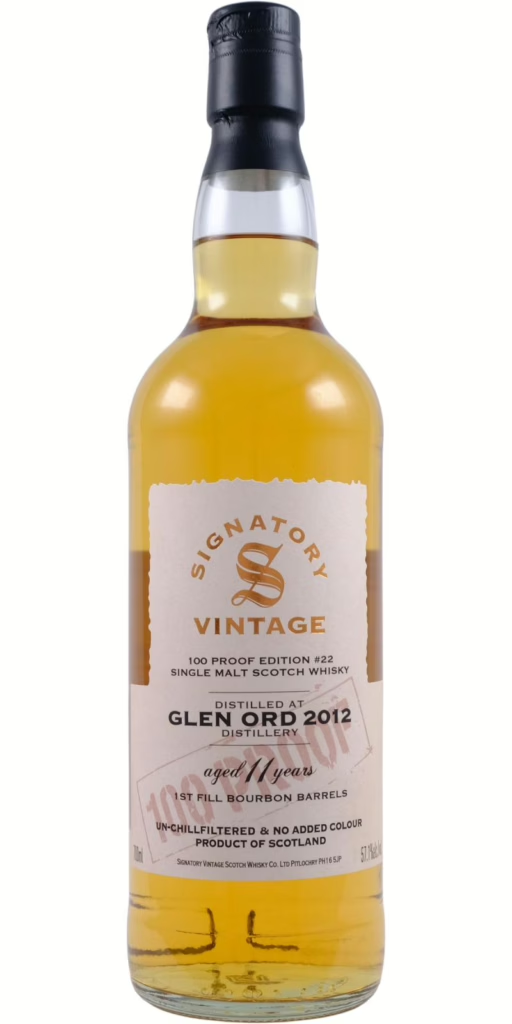
Colour:
Light gold
Nose:
Neat: Delicate nose with crème brûlée, green orchard fruit, creamy vanilla, honey, orangettes, malty aromas, grapefruit, baked freshness, apple, heather, and light floral notes. Not overly expressive.
With water: Custard appears, but overall, not much changes.
Palate:
Neat: Spicy and sharp, with pepper, chilli pepper, citrus fruits, wood and some bitterness. The palate also features vanilla, fudge, cream, honey, white pepper, and lively fruits like apples and lemons. After a few moments in the mouth, it turns slightly astringent and bitter.
With water: Mentholated liquorice appears, with herbaceous flavours.
Finish:
Medium length with fresh wood, sucrose sweetness, herbaceous notes and woody bitterness.
Comments:
This Glen Ord offers nice flavors but lacks complexity and depth; it would have needed a few more years in wood to mellow its roughness. Still, it provides far more character than the Singleton of Glen Ord range, which Diageo targets at Asian markets anyway.
Rating: 6/10
Glen Ord 2012 100 Proof Edition #43 Signatory Vintage (2025) Review
We stay with a Glen Ord 2012 bottled by Signatory Vintage, but this time this is the 100 Proof Edition #43, bottled on the 24th of April 2025. It matured for 12 years in first fill bourbon barrels, before undergoing the classic 57.1% ABV, no chill filtration nor added colour bottling. This is still available in the UK from £45, and about €64 at La Maison du Whisky in France.
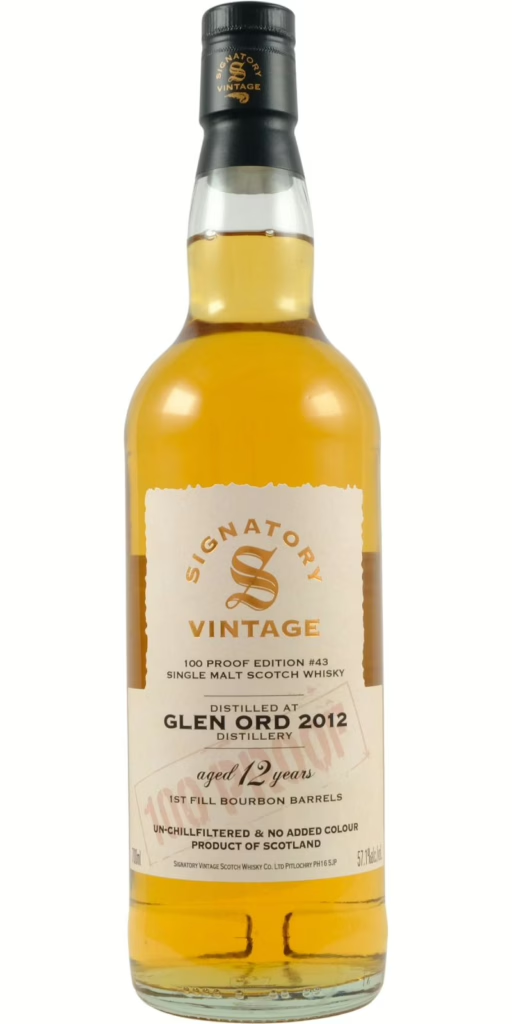
Colour:
Light gold.
Nose:
Neat: The nose is a bit close at first, but this was also from a freshly opened bottle. Sweet and vanilla-fruity, with lovely summery aromas of ripe orchard fruit, honey, and a hint of white pepper; the alcohol is only slightly noticeable. Floral and malted-spicy opening, with spring flowers, freshly cut barley, and a touch of lemony freshness, plus vanilla, green apple peel, and a light oak veil. Some walnut shells as well.
With water: The floral and malty notes remain, with the citrus and oak becoming more integrated. Some vanilla, melon and peach flavoured petit-suisse emerge.
Palate:
Neat: A distinctly powerful attack, with honey, lemon and plenty of white pepper; the spirit is full and structured, yet well balanced. Malted sweetness meets cereal biscuit, light roast/toast notes, lemon zest, apple pie, vanilla cream, and a touch of roasted oak. The high strength gives body without burning, remaining harmoniously integrated. There is also a mineral layer, bringing a nice edge.
With water: After a while, and with several drops of water, it becomes a wonderful, orange or almost even tropical-fruity, well-balanced whisky. The power softens, letting the honeyed fruit, vanilla, and cereal notes shine more clearly, while the spice becomes very slightly gentler.
Finish:
Long and dry, with notes of nuts, wood, and a touch of bitter dark chocolate; floral accents and a fine peppery spice persist, giving a characterful conclusion.
Comments:
This #43 edition marks a clear step up from #22: the extra year of maturation refines the whisky, sharpening flavour definition on the palate despite a nose that stayed somewhat reserved—likely since we opened the bottle fresh for the tasting without prior breathing. Overall, a very nice progression in balance and presence.
Rating: 6.5/10
Glen Ord 8-year-old Chorlton Whisky (2022) Review
We ended our session with an 8-year-old Glen Ord bottled in 2022 by Chorlton Whisky. It matured in a firs-fill Oloroso hogshead, that yielded 252 bottles at 57.9% ABV, here as well without chill filtration nor added colour. It seems to be still available in Italy, around €110 a bottle.
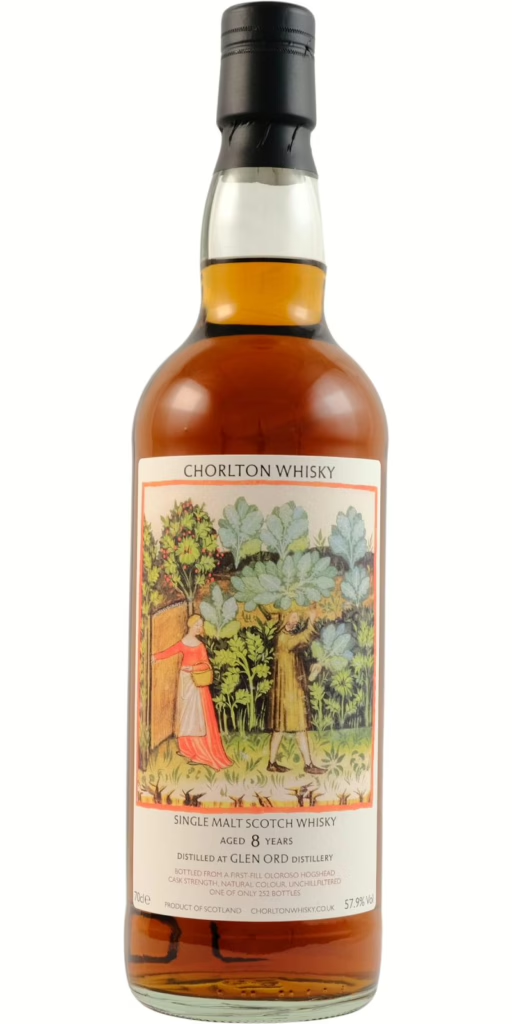
Colour:
Tawny.
Nose:
Neat: The nose invites with roasted hazelnuts, stout, tobacco, dried fruits (figs, raisins, dates and prunes), gingerbread, liquorice, apricot, butter caramel, and molasses; old-school dry sherry vibe with leather, cigar smoke and orange bitters.
With water: Reduction reveals some more young sherry, and copper and metallic notes.
Palate:
Neat: Big, bold, and chewy with caramel, plum, ginger, star anise, citrus, toasted hazelnuts and almonds, toffee, vanilla custard, red fruits/apples, cinnamon rolls, coffee, chocolate and spices; fat, waxy, and mouth-filling with glazed fruits, sour cherries and marmalade.
With water: The palate gains creaminess and juiciness, with cherries, candied fruits and reduced sharpness for a more approachable sip.
Finish:
Long and moreish with mocha bitterness, bonbons, dry sherry, cigars, oranges, chocolate, and lingering chewiness.
Comments:
This Chorlton Glen Ord screams modern Oloroso influence with its bold sherried vibe, yet it pulls off the profile impressively well. During the tasting, I wrestled with its ranking for a good while, weighing whether its strengths outshone the Signatory 11-year-old’s—beyond just cask differences, but their respective qualities and quirks too. In the end, my own Signatory 11-year bottle landed as the session’s weakest for me.