Speyburn remains a distillery I know little about, so this review explores its history first. Then it compares two Speyburn 15-year-old expressions: the official bottling against the SMWS single cask. We covered Speyburn once before, back in 2019, with just a quick introduction. This time, a full distillery overview precedes the detailed tasting notes on both whiskies.
We start a series of reviews of Ardbeg bottlings for Fèis Ìle, with the Ardbeg Ardbog, Auriverdes and Perpetuum. Other and latter releases will appear in upcoming reviews in the coming weeks. Fèis Ìle is Islay’s annual festival of whisky, music, and Gaelic culture, held over about 9–10 days at the end of May. It has grown into one of the world’s most influential whisky events, drawing thousands of visitors and turning the island’s distilleries into a global stage each spring.
Ardbeg Ardbog (2013) Review
We start today’s Ardbeg session with Ardbog, released in 2013 for Fèis Ìle 2013. It matured for 10 years in a mix of ex-Bourbon Barrels & Manzanilla Sherry Butts. They filled 13,000 bottles at 52.1% in the classic European 700 ml format, as well as some 750 ml and 4,500 ml. Expect to pay from €175 to several times that on the secondary market for a bottle of the European format.
Colour:
Russet.
Nose:
Neat: Thick, pungent peat smoke leads with seaside brine, sea salt, iodine, and motor oil, alongside lemon zest, citrus fruits, berries, and damp earth. Herbal notes, honey maple syrup, cherries, plums, walnuts, tobacco, vanilla, marzipan, and pecans with caramel or chocolate emerge on aeration.
With water: A few drops tame slightly the smoke and reveal sweeter cherries, vanilla fudge, and milk chocolate. Brine recedes slightly, making room for floral honey, and a cleaner citrus lift alongside lingering iodine and herbal peat.
Palate:
Neat: Punchy and oily, it bursts with salty brine, earth, smoke, and ash, tempered by Manzanilla‘’’s dry tang, nuts, cherries, lemons, and pepper. Burnt caramel, licorice, wood polish, tobacco, sticky prunes, dried apricots, honey syrup, and spicy tannins add complexity.
With water: The oily texture smooths, reducing initial burn to let sherry-driven nuts, cherries, and lemon candies shine brighter. Sweet malt, caramel, dried apricots, and prunes balance the salt and ash with softer spices and less aggressive tannins.
Finish:
Long, dry, and spicy with chili peppers, paprika, peat ash, oak, and lingering lemon salt.
Comments:
Peat and sherry can work well together. We’ve seen that with Uigeadail (that we need to review here!), and the Ardbeg Ardbog is another proof it does work, very well even. Peat, coastal characteristics, sherry sweetness and nuttiness intertwine seamlessly, and this Ardbog feels less young than more recent Ardbeg NAS, as we’ll see in the coming days and the next reviews. Really nice.
Rating: 7.5/10
Ardbeg Auriverdes (2014) Review
The Ardbeg Auriverdes was distilled in 2002 and bottled in 2014 for Fèis Ìle 2014. It matured for about 12 years in American oak casks, before being bottled at 49.9%. The main release is this one, but there’s also an Auriverdes Gold, with a gold tinted bottled, that was released for journalists, distillery ambassadors and bloggers. Of course, that rarest version (three hundred 700 ml bottles, a dozen of 750 ml, and a few 4,500 ml!) is stupidly expensive on the secondary market. The more classic version, however, is available from €110 on the secondary market.
Colour:
Amber
Nose:
Neat: Bright vanilla and citrus fruits mingle with wet peat, smoke, prickly iodine, sour cream, and hot chocolate laced with pepper. Soot, herbs, coffee grounds, maple bacon, smoked salmon, and resinous fir branches add a lovely empyreumatic layer.
Palate:
Neat: Sweet and smooth vanilla cream meets medicinal peat, juicy peaches, cinnamon jelly beans, bacon bits, honey butter, and floral hints. Chocolate noir, licorice, hay, peppery spices, saline notes, and charred oak build to a moreish, refined intensity. The mouthfeel feels a little light at first, following the Ardbog, but is, in fact, quite oily and velvety.
Finish:
Medium long with peppery smoke, drying ash, overripe pineapple, lemon peel, meatiness, and resinous peat.
Comments:
Another very good Ardbeg, but a tad simpler than Ardbog, it feels like it lacks a little something to be on par with Ardbog. However, the fact that there are no sherry casks involved allows for a brighter and cleaner profile, so, in the end, it will be a question of preference. But whisky and taste are subjective anyway, aren’t they?
Rating: 7/10
Ardbeg Perpetuum (2015) Review
The Ardbeg Perpetuum was bottled in 2015 to celebrate the distillery’s 200th anniversary, as it was founded in 1815. This single malt matured in a mix of bourbon and sherry casks, with an outturn of 72,000 bottles filled at 47.4% ABV for the limited edition release. There was also a Committee release, filled at a slightly higher ABV (49.2%), with just 12,000 bottles released. Perpetuum was non-chill filtered and natural colour. You can still find it easily enough but with a large markup, of course. Expect to pay around £300/€300 for a bottle of the committee edition, and as low as €130 for the general release, mostly in Germany at that price.
Colour:
Jonquille
Nose:
Neat: Briny peat smoke surges upfront with saline sea spray, earthy ash, and coastal iodine, backed by vanilla cream, milk chocolate, treacle, and nutty oak. Floral fruits, baked apples, orange, dark chocolate, coffee, pine resin, and subtle sherry notes add richness.
Palate:
Neat: Robust smoke delivers savoury bacon, cinnamon, nutmeg, and pepper alongside sweet vanilla, sherry hints, honey, and creamy malt. Medium-bodied with fresh minerality, orchard fruits (pear, prune), citrus acidity, and oily marine texture.
Finish:
Long and clean, the finish lingers on floral gardens, almonds, peppery spice, liquorice, nuts, and fading peat with saline citrus.
Comments:
Ardbeg Perpetuum is nice but you start to feel the youth. The average age of the whiskies is probably a few years younger than Ardbog and Auriverdes. The sherry is lighter than Ardbog, and you could think only bourbon casks were used.
Tormore rarely steals the spotlight, yet these two 20-something Tormore from That Boutique-y Whisky Company and Elixir Distillers make a strong case for paying much closer attention. Together, they sketch a compelling portrait of modern indie Tormore: bright, characterful Speyside spirit, handled with a light enough touch to let the orchard and exotic fruits do the talking. So without further ado, let’s get to our tasting glasses.
We explore three Glen Moray: two official bottlings and an independent one: the Glen Moray Warehouse 1 Tequila Cask Finish (peated and unpeated), and a 2007 bottled by Berry Bros & Rudd. Glen Moray Warehouse 1 series replaces the previous Cask Curiosity range. On the indy side, Berry Bros & Rudd, founded in 1698, stands as Britain’s oldest family-owned wine and spirits merchant. They operate from their iconic St James’s Street shop in London. The company holds a Royal Warrant and has supplied the British monarchy for centuries, evolving from grocery origins to a focus on fine wines and spirits.
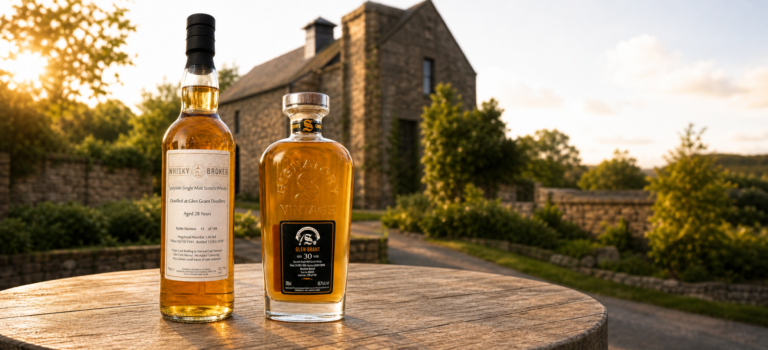
We kick off the year with two 30-year-old Bowmores from Silver Seal and Wemyss Malts – rare drams that languished too long before I seized the perfect moment. We already know Wemyss Malts, and Silver Seal is an independent bottler founded by Luca Gargano, championing unfiltered, cask-strength authenticity from historic casks.
We explore the Jura 17-year-old, Glentauchers 27-year-old, and Ben Nevis 28-year-old from Elixir Distillers’ Macbeth series Act 2. These drams mark our return to whisky after the twenty-something cognac reviews from the Cognac-Expert 2025 Advent Calendar and the recent Coleburn pair. Elixir Distillers, partnering with Livingstone Rare, crafted the Macbeth series from Shakespeare’s The Tragedy of Macbeth, assigning 42 unique Scotch whiskies to play characters across six thematic groups. Whisky writer Dave Broom composed vivid portraits that tie each spirit to its character’s personality, cask profile, and regional roots, while Sir Quentin Blake supplied striking and fun bespoke label illustrations. Elixir’s team – led by Sukhinder Singh and Oliver Chilton – sources casks from their vast network and Sukhinder’s own stock, prioritising pure distillate character over dominant wood influence.
On special days, I like to reach for something special, so I chose two Coleburn whiskies from Signatory Vintage for Christmas. After a lengthy cognac session from the Cognac-Expert 2025 Advent Calendar, I return to whisky. Coleburn has tempted me for ages, especially since my 2019 visit to Murray McDavid at Spirit of Speyside – where they lease the distillery’s warehouses for cask storage, though workers dismantled the site long ago. Sourcing Coleburn proved tough, yet I snagged two samples in days. As always, I’ll start with the distillery history before diving into these festive Signatory pours.
Day 23 of the Cognac-Expert 2025 Advent Calendar features ABK6 Extra, a single-estate cognac from Domaines Francis Abécassis. The producer farms over 370 hectares across Fins Bois, Petite Champagne, and Grande Champagne crus. We’ll introduce ABK6 before reviewing their ABK6 Extra cognac!
Day 22 of the Cognac-Expert 2025 Advent Calendar brings an independent bottling: Les Grandes Jouberteries Lot 65 from Authentic Spirits. A few months ago, this bottler impressed us with an excellent La Prenellerie cognac, but Les Grandes Jouberteries steps onto our radar for the first time today. As always, new names deserve a proper introduction before the review, so let’s get to know Les Grandes Jouberteries first.
We close the third week of our Cognac-Expert 2025 Advent Calendar with a 50-year-old Grosperrin Très Vieille Héritage cognac. We love tasting another Grosperrin – we always visit them at spirits shows, and even stopped by their Saintes cellars in February this year.