I hesitated for a moment to call this review “Threeninich”, but, in the end, these three Teaninichs deserved something a little more dignified. This set brings together a Teaninich 10-year-old Flora & Fauna, an 11-year-old bottled by Chorlton, and a 1983 Signatory Vintage bottling from 2011, three very different snapshots of a distillery that has spent most of its life working quietly in the background.
Teaninich Distillery
Teaninich is one of those distilleries that sits a little under the radar until you start looking at how much whisky it actually makes. Founded in 1817 by Hugh Munro on the Teaninich estate near Alness, it was one of the early legal Highland distilleries and has spent most of its life feeding blends rather than chasing a loud single-malt profile.
The history is fairly typical in broad strokes, but the details are what make it interesting. After the Munro family period, the distillery passed through Robert Innes Cameron’s hands in the late 19th century, then moved to Distillers Company Limited in 1933; it was then expanded, rebuilt, mothballed, and modernised in stages as demand shifted over time.
What really stands out is the scale. Teaninich is usually described as a workhorse distillery for Diageo, with production often cited around 4 million litres per year in older references and around 10 million litres per year after the 2013 investment and new still house expansion.
That 2013 expansion mattered because it pushed Teaninich firmly into big-production territory. Sources say Diageo spent about £26 million on a new still house with six pairs of stills, and the distillery is also unusual for using a mash filter rather than a traditional mash tun, which is still relatively rare in Scotch.
If you want the plain-English version, Teaninich is not a flashy ‘hype’ distillery, but it has real historical weight, serious capacity, and a production setup that makes it one of the more technically interesting names in the Highlands. It is the sort of distillery that quietly matters a lot more than its profile suggests.
Like many of Diageo’s distilleries, casks seem easily available to independent bottlers, and a look at Whiskybase shows that, for instance, dozens and dozens of indy bottlings were released in 2025 alone. However, it seems they didn’t cross my path, as it’s been some time since we last reviewed a Teaninich, and I had nothing really recent at hand…
Teaninich 10-year-old Flora & Fauna (2020s) Review
We begin with Teaninich’s only official core release: the 10-year-old bottled in Diageo’s ‘Flora and Fauna’ range, named for its classic labels decorated, fittingly, with flora and fauna. Diageo does not disclose the cask types, but ex-bourbon casks likely account for most, if not all, of the maturation. As with the rest of the Flora & Fauna series, it is bottled at 43% ABV, chill-filtered, and coloured. Prices generally start at around €45 in Europe and £50 in the UK.
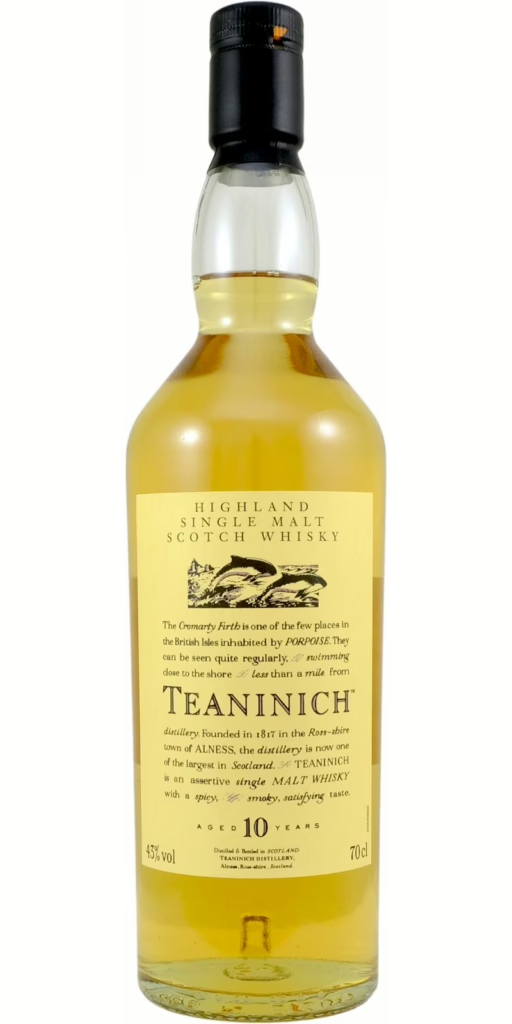
Colour:
Old gold (but fake)
Nose:
Neat: Fresh and citric at first, with oranges and lemons leading the way, then violet-like perfume, orange juice and a touch of cornflake cereal. Some floral tea, resinous wood and camomile give the nose a pastoral, lightly herbal feel.
Palate:
Neat: Light bodied but crisp, with orange-sweet fruit, dry malt, a pinch of salt and gentle acidity. Time reveals a little more roundness, with toffee, vanilla, pineapple and a faint oily edge.
Finish:
Long, dry and zesty, with orange peel, beeswax and a lingering cereal note. The aftertaste is clean, leaving a lightly saline impression.
Comments:
This Teaninich opens nicely, with an appealing nose, but the heavily reduced, chill-filtered palate is a slight disappointment by comparison. Even so, it remains flavourful, with a pleasant citrusy brightness. In the end, it’s a gentle dram: unobtrusive, easygoing, and still enjoyable to sip.
Rating: 6/10
Teaninich 11-year-old Chorlton Whisky (2020) Review
This Teaninich was distilled in 2009, then matured for 11 years in a hogshead that had previously held peated Islay whisky for well over a decade. It was bottled by Chorlton Whisky at cask strength (57.5% ABV) in 2020, with only 187 bottles released, without chill filtration nor added colour. Almost sold out: there’s one bottle left in Italy (€129), and it doesn’t seem to often appear at auction.
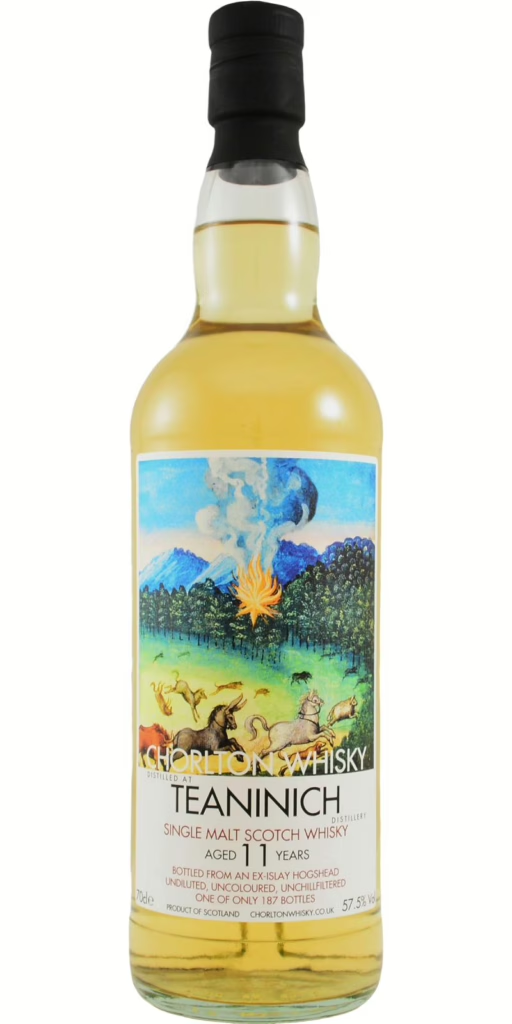
Colour:
White wine.
Nose:
Neat: A light, maritime‑style smoke meets green‑tinted fruit: briny seaweed, a whisper of tarred rope and a ‘dusty’ phenolic edge sit alongside underripe plum, stewed pear and a sweet vanilla‑cream base. Mineral‑like stone‑fruit notes and a faint rubbery, sweet‑meat nuance add an appealing twist to the nose as well.
With water: Water opens the fruit and vanilla, making the plum, peach and lemon more prominent, while the smoke and rubbery notes retreat slightly. The maritime herb and mineral dimensions remain, but the nose feels cleaner and less disjointed.
Palate:
Neat: Rich and oily, with a surprisingly full, unctuous peat‑smoke character that wasn’t fully telegraphed on the nose. Tinned peaches, oily lemon peel and browned butter sit on a gently smoky, slightly burnt‑rubber‑like note. The palate also carries a fringe of chalky‑mineral texture and a thread of fragrant, barbecue‑style peat that ties the smoke back to the ex‑Islay cask.
With water: The palate softens and becomes creamier, with caramel, vanilla‑custard and a more obvious biscuit‑like sweetness emerging alongside the peat smoke, while the burnt‑rubber edge is tamed.
Finish:
‘Long and smoky, with vanilla, almond, oak and a persistent citrusy‑lemon tingle. A saline‑peat edge lingers comfortably, leaving a pleasantly “peated‑Highland” aftertaste rather than a heavy‑Islay knockout.
Comments:
A surprising cask maturation for Teaninich, but one that works well and makes Chorlton’s choice easy to understand. It reveals an unusual side of the distillery, with a touch of peat and smoke not often associated with Teaninich. While it is not perfect and feels a little disjointed at times, it ultimately comes together nicely and makes for a very good dram.
Rating: 7/10
Teaninich 1983 Signatory Vintage (2011) Review
This Teaninich was distilled on 7 December 1983 and matured for 27 years in a refill butt before being bottled at cask strength, 60% ABV, on 17 June 2011 as part of Signatory Vintage’s Cask Strength Collection, cask #8069. As with all releases in the range, it is non-chill-filtered and retains its natural colour. Released nearly 15 years ago, it is now long sold out, even though the butt yielded a generous 618 bottles.
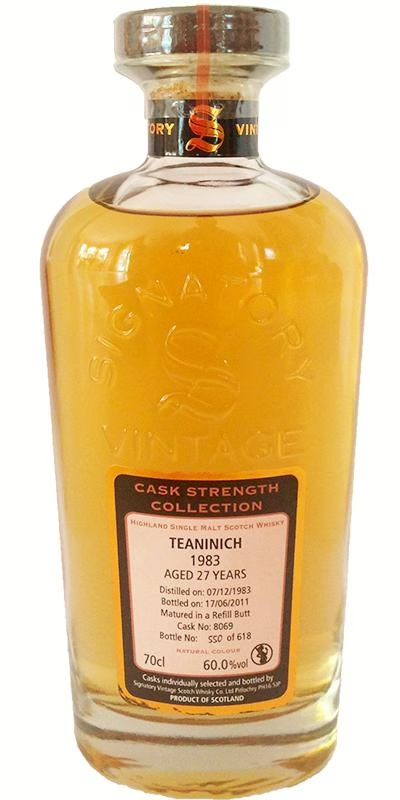
Colour:
Jonquille.
Nose:
Neat: Very floral at first, with old‑school pot‑pourri, rose hips, dried violets and a faintly metallic note. There is a soft, perfumed sweetness behind it (elderflower, honey), plus a light mineral‑dusty quality and a whiff of varnish, giving it a classic‑1980s‑Highland impression rather than anything heavy or sherried‑sweet. This is quite yeasty as well, reminiscing of a washback during fermentation.
With water: A few drops loosen the waxy‑fruit core, pushing apple, pear and citrus more forward while softening the peppery/alcoholic hit. The grassy‑silage and herbal notes become leafier and less sharp, and the whisky gains a slightly more floral‑tea lift.
Palate:
Neat: Oily but not that intense, with the alcohol heat raising slowly. The palate starts with a tightly coiled core of honey, lemon‑drop malt and green apple juice. The refill‑butt character shows as a soft oak‑spice wave (white pepper, a touch of clove) and a light toasted‑wheat feel, while the distillery’s grassy, almost saline‑peppery side gives the mouthfeel a juicy, briny tug. The metallic note from the nose is a little amplified on the palate, with old copper coins.
With water: Water makes the mouthfeel creamier, with more honey, vanilla custard and soft stone fruit coming through. The grassy‑saline thread and white‑pepper spice remain but integrate better.
Finish:
Long, with a honeyed‑citrus echo, white‑pepper spice and a lingering grassy‑Highland note. The finish dries gently, with a touch of mineral‑like chalk and a faint oak‑wood echo.
Comments:
The high strength of this more than a quarter of a century-old malt suggests the cask was remarkably restrained over time. The nose is unexpectedly floral and metallic, with a faint soapy edge, while the palate carries some of that metallic character too but improves on the unsettling aromas. In the end, despite its merits, the off notes would keep me from reaching for this bottle very often.