Today’s post is one I never quite expected to write: the 1,000th spirit tasted and reviewed for this blog. What started on August 8, 2019, with a Balblair 1979 has become, over seven years and hundreds of evenings with a glass, a record of the spirits that shaped my palate and the stories behind them. There have been detours into cognac cellars, discoveries on Islay and other famous places, and far more independent bottlings than I could have imagined back then.
Today’s drams are seven Taliskers, all very special bottles. Over the last few years, I’ve found myself wanting to review several spirits in the same blog post so I can have proper comparison points. It also makes rating them easier, because I’m not judging each dram in a vacuum but against a few peers that helps bring out its strengths and weaknesses. That’s really what I wanted for this milestone post: not just a line-up of special bottles, but a set of drams that could speak to one another.
Tasting them side by side gives me context, and context matters when you’re trying to write something fair and honest. It helps me see what a whisky is doing well, where it falls short, and whether it stands out for the right reasons. That approach has become more important to me over the last few years. I don’t just want to taste a spirit once and move on; I want to place it in a small conversation, with a few other bottles around it to sharpen the picture. It makes the notes more useful for me, and I think it makes the article more interesting to read as well.
This article is part tally, part retrospective, and part tasting session — seven drams lined up to mark the moment, with the thousandth dram last.
A short retrospective
I’ve now published 474 posts, and this is the 474th. That still feels slightly unreal when I think about it, because the blog has grown far beyond what I imagined when I started. I’ve reviewed 1,000 spirits across the site, which is the number that really matters here, and it says as much about persistence as it does about tasting.
I began with whisky, and whisky is still the backbone of the blog, but the scope has widened steadily over time. Cognac, Armagnac, Calvados, rum, brandy, and a few fruit eaux-de-vie have all found their place here. That broadening feels natural to me now, because my own interests have widened in the same way.
The early years were shaped by collaboration. Ainulindale wrote with me at the beginning, and KanpaiPlanet contributed a couple of posts, but for a long time now the blog has mainly been mine. That shift gave the site a more personal rhythm, and I think it also made the archive more clearly reflect my own tastes and obsessions.
Looking back through the reviews, I can see how much my preferences have evolved. I’ve always been drawn to bottles with character, but I care even more now about context, texture, and balance. I’ve become less interested in simply chasing names and more interested in bottles that have something to say.
What the numbers say
The numbers don’t tell the whole story, but they do give a useful shape to the journey. They show me how the blog has changed, how my tastes have broadened, and how the pace of writing has shifted over time. They also remind me that this project has been steady rather than dramatic, built spirit by spirit, post by post.
A few things stand out to me:
- The blog began in August 2019, and it has grown into a long-running record of tastings, notes, and personal milestones.
- We’ve now reached 1,000 reviewed spirits, which gives the blog a kind of symmetry that I couldn’t have planned.
- I’ve published 474 posts in total, so the writing side of the project has grown alongside the tasting side.
- Whisky remains the dominant category, but the later years show a much broader mix of spirits.
- More Drams increasingly reflects my interest in French spirits, older bottlings, and independent releases.
I also like that the numbers reflect a change in how I taste. Early on, I was often focused on the obvious markers — age, distillery, bottler, strength. Over time, I’ve become more interested in what a spirit actually gives me in the glass, and in how it compares with others from the same family. That is part of why tasting several bottles in one post has become so useful to me.
Why I review in sets
There’s a practical reason I’ve increasingly wanted to review several spirits in the same post: it gives me better comparison points. When you taste bottles side by side, you start to see patterns much more clearly. A whisky that seems broad and expressive on its own can suddenly look less precise next to another; a bottle that feels restrained at first can turn out to be the most elegant of the group.
It also makes scoring easier, at least for me. I’m not trying to flatten everything into a single scale, but a line-up helps me check whether a score really makes sense in context. It is one thing to taste a bottle and think, “That’s good”; it is another to taste it beside a few peers and decide whether it is merely good, genuinely impressive, or quietly outstanding.
That side-by-side approach has become especially useful with Talisker. It is a distillery with a strong identity, but that identity can show itself in different ways, depending on the bottling, the age, the cask, and the vintage. Putting several Taliskers in the same article gives me a chance to see those differences properly, and that makes the review more interesting for me to write.
A few statistics
The reviews now cover 1,000 spirits, and whisky still makes up the clear majority with 898 entries (before today’s article). Cognac is the second-biggest category with 85 reviews, while armagnac, Calvados, rum, brandy, and fruit eaux-de-vie make up the rest. That spread matters to me, because it shows how much the blog has widened beyond whisky over time.
If I look at the most reviewed distilleries and types, Bimber comes out on top with 41 reviews. Unfortunately, Brexit was the cause of the Bimber samples running out, as shipping from the UK to France became close to impossible. After that come Blended Malts with 39 and Blends with 35, which is a good reminder that blends have had a bigger place in my reviews than people might expect, and a bigger place in global whisky consumption than what we enthusiasts drink. Among named distilleries, Ardbeg is next with 24 reviews, followed by Springbank with 19.
On the bottler side, official bottlings dominate by a mile with 595 reviews. The main independent bottlers in my reviews are That Boutique-y Whisky Company with 60, Scotch Malt Whisky Society with 52, Signatory Vintage with 40, and The Whisky Cellar with 29. That feels about right to me: I’ve always had a real interest in both official releases and independent bottlings, and the numbers reflect that balance.
The score spread is wide, from 1 at the bottom to 95 (until 2023) or 9.5 (since 2024) at the top, with a median score of 7.5 (in the 10 points scale). Since I changed from a 100-point scale to a 10-point scale in January 2024, I treat 95/100 and 9.5/10 as the same top rating. That means my highest rating has gone to a small but impressive group of bottles, including Brora 9th release 30 yo, Yoichi 1988, Springbank 1969 Signatory, Port Ellen 12th release, Famille Cabanne Lot 24 GC Cognac, Bowmore 1969, and Speyside Region Malt 1973 Antique Lions of Spirits. And maybe something else today, who knows?
Distilleries and bottlers
When I look at the distilleries that have impressed me most, the names that rise to the top are Brora (9.25/10), François Voyer (8.50/10), Grosperrin (8.33/10), Talisker (8.28/10), Port Ellen (8.25/10), and Macallan (8.17/10 – but we’ll see how this evolves after a few official bottlings, stay tuned), Glendronach (8.10/10), Famille Cabanne (8/10) and Celtic Whisky Distillerie (8/10). Those are the names that have most consistently given me bottles I’ve really enjoyed, and it’s no surprise to see them at the top once I widen the net to bottles I’ve reviewed at least twice.
At the other end, the most disappointing distilleries are WhistlePig (3.33/10), Port Dundas (4.50/10), Allt-A-Bhainne (4.75/10), Kingsbarns (5.00/10), Glenlivet (5.17/10), Glengoyne (5.25/10), Bushmills (5.42/10), Gaolong (5.50/10), Johnnie Walker (5.70/10) and Pulteney (5.70/10). Those are the ones that have more often left me wishing for a bit more precision, depth, or character. But I do keep in mind that there are probably excellent expressions from each of them somewhere, just that they have not reached me yet.
On the bottler side, the strongest averages belong to Antique Lions of Spirits (9.25/10), Specialty Drinks (8.50/10), Malternative Belgium (8.36/10), Decadent Drinks (8.12/10), Le Gus’t (8.00/10), Atom Brands (8.00/10), Hidden Spirits (7.90/10), Les Grands Alambics (7.83/10), Authentic Spirits (7.75/10) and Elixir Distillers (7.70/10). That’s a very solid group overall, and it reflects the bottlers I tend to trust when I want bottles with real personality.
The bottlers that have disappointed me most are The Caskhound (5.00/10), Quiet Man (5.67/10), The Whisky Jury (5.75/10 – to their defence I only reviewed their two Agitator, so by far not the best they offer, I have a high consideration for them), Brühler Whiskyhaus (6.00/10), Living Souls (6.17/10), The Single Cask Ltd (6.20/10), or Lost Distilleries (6.29/10). That doesn’t mean I never found anything good from them, but, on average, they’ve given me fewer bottles that really stood out.
Personal Favourites
There are also a few names where I know I’m never entirely objective, because they mean something more to me than the glass alone. Balblair (7.13/10) is one of those, because it was the first Scotch whisky distillery I visited, and that gives it a very particular place in my memory. Glen Moray (7.27/10) and Dingle (6.97/10) are similar for me in the sense that they carry people, places, and experiences that matter beyond the score.
The same is true for some cognac names. Jean-Luc Pasquet (7.25/10), Famille Cabanne (8.00/10), Grosperrin (8.33/10) and Prunier (7.33/10) all have that extra layer of meaning for me, whether because of the people involved, the memories attached to them, or the place they hold in my own journey. I try to stay honest with the glass, but I also know that some bottles come with a bit of personal weight that naturally shapes the way I approach them.
Closing Thoughts
Reaching 1,000 reviewed spirits feels less like a finish line than a useful checkpoint. I’ve gone from a first Balblair review in 2019 to a much broader and more varied archive, and the path in between has been full of bottles that taught me something — sometimes about whisky, sometimes about spirits more broadly, and sometimes just about my own preferences.
For me, that is the real value of the exercise. The blog is a record of what I’ve tasted, of course, but it is also a record of how I’ve learnt to taste. If the early years were about discovery, the later years were about comparison, context, in-depth look and confidence. That feels like a good place to mark a thousand spirits, and a good place to start the next thousand.
Talisker 1982 20-Year-Old Special Release (2003) Review
The Talisker 1982 (bottled in 2003) is a 20-year-old single malt released as part of Diageo’s annual Special Releases collection. Distilled in 1982, this specific vintage was vatted exclusively from refill American oak ex-bourbon casks, and was bottled at a cask strength of 58.8% ABV. True to the premium nature of the Special Releases line, it was bottled without chill filtration and at its natural colour. This release was limited to a run of 12,000 bottles. Often regarded as a benchmark for modern Talisker and a precursor to the widely loved 18-year-old (which launched a year later), it has become highly collectible. Today, it commands extreme premiums on the secondary market, with specialist retailers pricing it anywhere from €800 but an average value of just under €600 on auction.
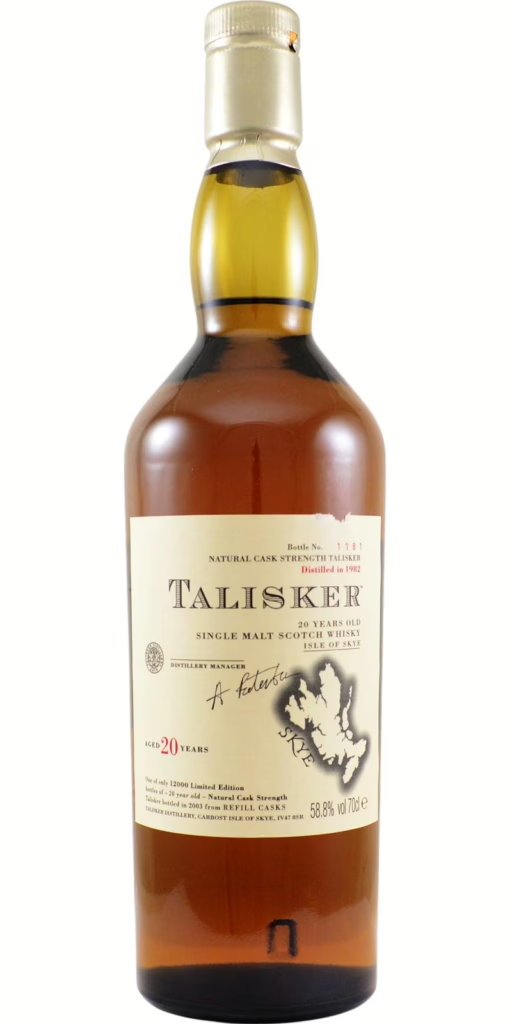
Colour:
Deep copper.
Nose:
Neat: The nose is a quintessential, deeply concentrated expression of Talisker’s maritime DNA. It opens with a vibrant, intense aroma of sea spray, wet beach rocks, and a very mild, peppery peat smoke. Beneath the coastal salinity, the refill bourbon casks provide a lovely, sweet foundation of honey, honeycomb, and rich butterscotch, accompanied by fresh red apples and a slight, intriguing note of salted pistachio shells.
With water: Adding a few drops of water subdues the sharp oceanic bite and accentuates the softer, sweeter notes. The honey and butterscotch expand, revealing ripe apricots and a subtle, fragrant hint of citronella. The earthy peat smoke remains present but becomes slightly drier and woodier.
Palate:
Neat: The palate is explosive, viscous, and fiercely powerful at 58.8% ABV. It delivers an immediate, intense hit of freshly cracked peppercorns. This intense, slightly bitter pepper heat is quickly followed by savoury, mineral notes of rock salt, damp earth, and a bright, tart lemon acidity that cuts cleanly through the heavy smoke and brine.
With water: Dilution tames the aggressive chili bite, transforming the thick texture into a perfectly balanced mouthfeel. The intense maritime and peppery notes mellow, allowing the rich, sweet honeycomb and red apple from the nose to coat the palate beautifully. The salt integrates perfectly with the honey, creating a savoury-sweet profile reminiscent of salted caramel.
Finish:
The finish is exceptionally long and deeply warming. The sweet vanilla and apple notes slowly fade, leaving a lasting, austere impression of lingering, peppery peat smoke, sea salt, and a final touch of dry oak char.
Comments:
The first Talisker of today, and already one of the best Taliskers I’ve ever had the chance to taste (I was very lucky to be able to try a 41-year-old at Whisky Live Paris last year, unbelievably good). This 20-year-old is like a Talisker concentrate, intense, very coastal and salty, with a great peppery heat, this is delicious.
Rating: 9/10
Talisker 25-Year-Old Special Release (2004) Review
The Talisker 25-Year-Old (bottled in 2004) was also part of Diageo’s annual Special Releases collection. This 2004 release, and the other 25-year-olds we’re tasting today hold particular historical significance, as it comes from a highly celebrated era (2001–2010) when Talisker’s older age-statement expressions were bottled at natural cask strength, before Diageo standardised the 25-year-old and 30-year-old at 45.8% ABV in 2011.
Matured exclusively in refill casks, this expression was bottled at a powerful cask strength of 57.8% ABV (115.6 proof). True to the ethos of the Special Releases series, the whisky is presented without chill filtration and at its natural colour. The 2004 release was limited to an outturn of 21,000 individually numbered bottles globally. Due to its legendary status among collectors, it has become incredibly rare. While it once retailed for under $200 in the US, it now commands massive premiums on the secondary market. Current auction estimates and specialist retail prices range from approximately €714 to over €1,200 ($800 to $1,500), depending on the condition of the bottle and its original presentation box.
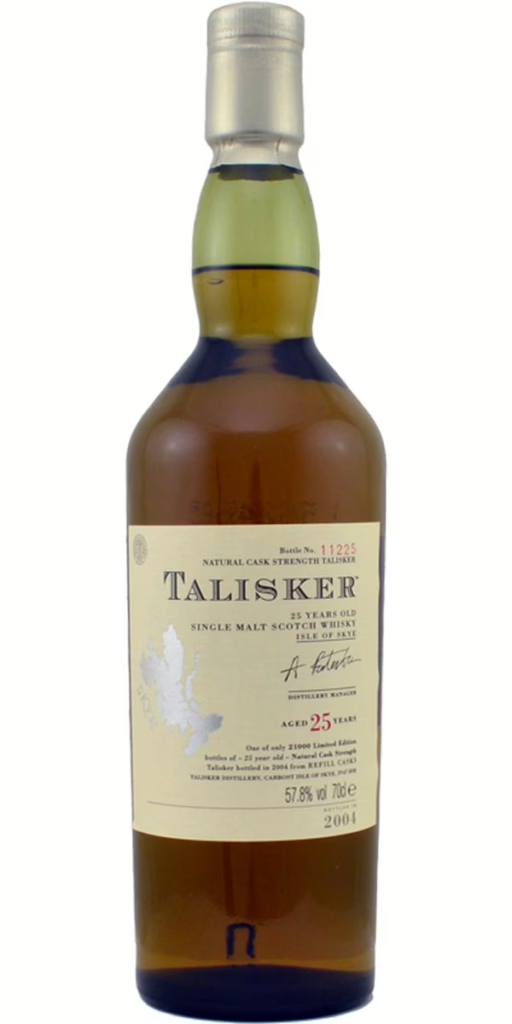
Colour:
Deep gold.
Nose:
Neat: The nose is astonishingly fresh for a 25-year-old whisky, yet undeniably complex and classically Talisker. It opens with a sweet, concentrated burst of fruit—specifically apricot jam (and their cracked almonds), peaches, and ripe apples. Beneath the fruit lies a refined, sophisticated maritime character, offering aromas of sea breeze, damp chalk, dried seaweed, and a gentle, earthy peat smoke reminiscent of dry pipe tobacco. Given enough time in the glass, beautiful, mature notes of old leather-bound books, polished antique wood, and almonds begin to emerge.
With water: Adding a few drops of water elevates the sweet, baked pastry notes. The apricot jam shifts slightly toward baked vanilla and lime, while the maritime salt spray becomes sharper. The aged oak influence reveals a delicate, refined aroma of dark chocolate.
Palate:
Neat: Despite the quarter-century of aging, the spirit remains fierce, expansive, and incredibly powerful at 57.8% ABV. It delivers an immediate roar of Talisker’s signature chili and white pepper heat, quickly followed by a heavy dose of coastal sea salt and minerals. As the initial heat subsides, the palate becomes surprisingly sweet and juicy, bringing forward thick honey, canned peaches, and waxy vanilla. The old oak maturation is evident in the background, offering complex, slightly dry notes of walnuts, espresso coffee, and tanned leather.
With water: Dilution, here again, helps tame the lovely peppery bite. The texture becomes oilier, allowing the sweet honey and some pineapple notes to coat the mouth. The intense rock salt integrates perfectly with the sweet fruit and old oak, while the smoke becomes slightly ashier and more heathery.
Finish:
The finish is exceptionally long, rewarding, and warming. The sweet peach and honey notes fade gracefully, leaving a lasting, slightly bitter and dry aftertaste of walnut, lemon peel, and dry oak. A final, savoury umami note lingers alongside the memory of coastal sea spray and sweet peat smoke.
Comments:
Very vigorous and powerful moult, all standard Talisker derivatives, plus sweet tropical motifs and lemonade festive mood. This is a really beautiful late 1970s Talisker. Like the 1982, this is concentrated and potent Talisker, something you cannot tire of, and something you’d love to have a case of in your whisky room.
Rating: 8.5/10
Talisker 25-Year-Old Special Release (2005) Review
We continue with The Talisker 25-Year-Old (bottled in 2005) is the highly acclaimed third release of the 25-year-old expression within Diageo’s annual Special Releases collection (after the 2004 bottling tasted above, and one released as part of the Special Release 2001 range). Distilled no later than 1980, the spirit was matured in refill casks. Like the 2004 edition, it comes from the revered era before Diageo reduced the ABV of its older Taliskers. It was bottled at a robust, natural cask strength of 57.2% ABV.
As is standard for the premium Special Releases line, it was presented without chill filtration and at its natural colour. This specific release had a relatively large outturn for an older whisky, with exactly 15,600 individually numbered bottles produced worldwide. Due to its age, historical significance, and reputation as one of the best 25-year-old Taliskers ever released, it has become highly sought after by collectors. Today, it commands a premium on the secondary market; prices generally range from $1,200 to over $1,400 (£1,100) at specialist retailers and auctions.
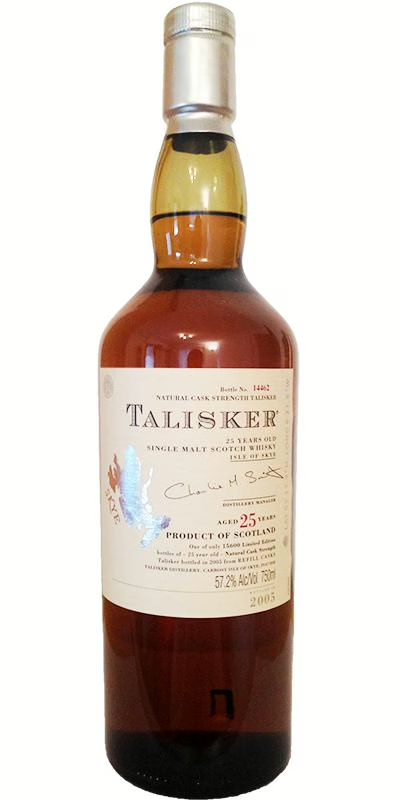
Colour:
Deep gold.
Nose:
Neat: The nose is astonishingly complex, beautifully balancing old-aged fruit with coastal weirdness. It opens with a sweet, deeply pitched aroma of rich honey, warm vanilla, and surprisingly tropical fruits like quince and passion fruit. The coastal DNA quickly asserts itself with savory, slightly industrial notes of putty, fish oil, and sea brine, famously described by some as smelling like a greenhouse full of tomato plants. As it sits, the trademark black pepper and soft, fragrant peat smoke emerge.
With water: Adding a few drops of water elevates the citrus elements, bringing forward bright notes of Seville oranges and sweet lemon. The industrial, rubbery notes dissipate quickly, leaving behind a comforting, earthy aroma of burnt driftwood, dry heather, and a warm hearth.
Palate:
Neat: At 57.2% ABV, the palate is full-bodied, thunderous, and intense. It arrives sweeter than the nose suggests, immediately delivering rich, syrupy fruits, refined sugar, and honey. This sweetness is rapidly overtaken by a massive hit of Talisker’s signature chili pepper and rock salt. Mid-palate, the age becomes evident through a gentle, mellow barley-malt character and a wave of fragrant, earthy peat smoke.
With water: The heavy spice softens, allowing sweet citrus (lemon and orange) and vanilla oak influence to integrate perfectly with the savoury brine. The texture becomes oilier, coating the mouth in a luxurious mix of sweet fruit and maritime smoke.
Finish:
The finish is long, complex, and echoing. The sweet fruit and honey fade out, leaving a lasting, satisfying interplay of bitter oak tannin, sea salt, and a final, lingering hit of cracked black pepper and dry peat smoke.
Comments:
This 2005 release of the Talisker 25-year-old is almost as good as the 20-year-old, and clearly a step above the 2004 edition. This is slightly more complex and fruity than the 2004 release, with a lovely peat and coastal character, completely Talisker. I don’t do quarter points, so I have to decide between 8.5 and 9: it will be a 9.
Rating: 9/10
Talisker 25-Year-Old Special Release (2006) Review
The Talisker 25-Year-Old (bottled in 2006) is the fourth edition of the 25-year-old released as part of Diageo’s annual Special Releases collection. Also matured exclusively in refill American oak casks, this expression was bottled at a potent 56.9% ABV. Like the others above, this whisky is non-chill filtered and presented at its natural colour. Compared to the massive 2005 release, the 2006 edition was significantly rarer, with a limited outturn of exactly 4,860 numbered bottles globally. Today, it is highly collectible and rarely seen outside of specialist auctions or vintage retailers. While standard modern 25-year-old Talisker (bottled at 45.8% ABV) currently retails for around £499 to $600, this specific 2006 cask-strength edition commands high premiums on the secondary market, generally priced between €750 and €900 depending on the condition of the bottle and presentation box.
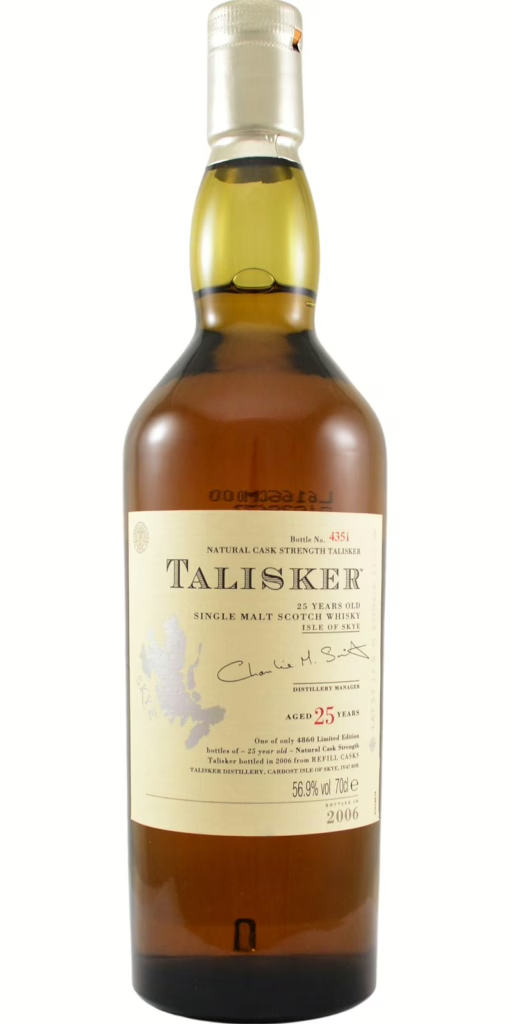
Colour:
Burnished.
Nose:
Neat: The nose is a beautiful, mature expression of Talisker, showing more bright fruit than the younger expressions. It opens with a vibrant wave of sweet citrus—specifically lemon and tangerine—alongside notes of fresh melon, green apple, and sweetened, stewed rhubarb. Beneath the sweet fruit lies the signature coastal DNA, offering complex aromas of sea salt, damp earth, and a distinct medicinal iodine note. Given time in the glass, rich secondary aromas of dark chocolate sauce, roasted hazelnuts, and old oak furniture polish begin to emerge.
With water: Adding water significantly alters the nose. The bright, zesty citrus notes recede, allowing the earthy, heathery peat smoke and sweet vanilla from the American oak to take centre stage, creating a much more balanced and traditional Talisker aroma.
Palate:
Neat: The palate is incredibly impactful, viscous, and warming. It delivers an immediate, massive hit of Talisker’s trademark chili and black pepper heat. As the initial spice explosion subsides, a heavy, earthy peat smoke emerges, balanced by a rich sweetness of honey, vanilla, and dark chocolate. The wood influence provides a slight astringency and robust oak tannins that grip the sides of the tongue.
With water: Dilution is highly recommended to tame the sheer power of the pepper. Water softens the chili heat and smooths out the astringent tannins, resulting in a creamier mouthfeel. The sweet melon, vanilla, and caramel flavours become more prominent, perfectly counterbalancing the savoury rock salt and medicinal smoke.
Finish:
The finish is exceedingly long, brooding, and intensely peppery. The sweet fruits quickly fade, leaving a lasting impression of cracked black pepper, dry tobacco leaves, and earthy peat smoke that rises back up through the nostrils. A final, savoury touch of coastal salt brine lingers right at the end.
Comments:
Another absolutely stunning 25-year-old Talisker. Neat, it slightly diverges from the usual profile, with a little more fruits and some different ones, but you’d almost want even more out of it. But once you add a few drops of water, it truly shines, and there’s nothing to remove and nothing to add. Superb once again.
Rating: 9/10
Talisker 25-Year-Old Special Release (2007) Review
The Talisker 25-Year-Old (bottled in 2007) is the fifth edition of the 25-year-old expression within Diageo’s annual Special Releases collection. Distilled around 1982, the whisky was matured in a combination of refill American oak (ex-bourbon) and European oak (ex-sherry) casks. The 2007 release was bottled at 58.1% ABV, and as always in this range, without chill filtration and at its natural colour. This was a quite limited edition, with an outturn of exactly 6,894 individually numbered bottles. (A very small subset of 500 bottles was sold in an extravagant solid oak “Sea Chest” featuring rolling tumblers.) Today, the standard 2007 release is a prized collector’s item, frequently commanding auction and specialist retail prices of around $1,700 (£1,300).
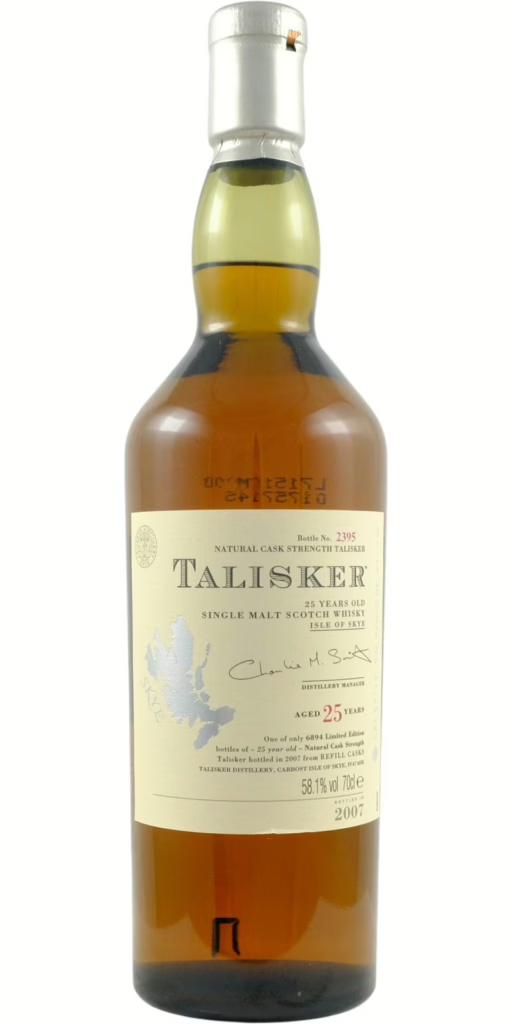
Colour:
Chestnut.
Nose:
Neat: The nose is a remarkable balancing act between deep, old-aged sweetness and fierce coastal character. It opens with a distinct, mild peatiness reminiscent of dry pipe tobacco and warm wood smoke, which quickly merges with vibrant aromas of sweet apricots, dried fruit, and honey. Given time in the glass, the sherry influence and long maturation reveal mature notes of old leather-bound books, polished oak furniture, and toasted almonds. The underlying maritime DNA remains present, offering subtle hints of sea salt and coastal herbs.
With water: Adding a few drops of water to the 58.1% ABV spirit softens the alcohol prickle and enhances the coastal elements. The sweet apricot and honey notes recede slightly, allowing a bright, slightly bitter lemon peel aroma to step forward alongside the dry tobacco smoke and damp earth.
Palate:
Neat: The palate is incredibly thick, viscous, and immediately impactful, once again. It starts with a rich, honeyed sweetness mixed with flavours of apricot jam and minerals. This initial sweetness is rapidly overtaken by Talisker’s signature chili pepper spice and a heavy dose of dusty oak, old leather, and sweet pipe tobacco. Despite the ABV, the mouthfeel is round and lacks any sharp or overly aggressive edges.
With water: Dilution is highly recommended to tame the sheer power of the spirit. Water transforms the thick texture into an oilier, creamier mouthfeel. The pepper spice mellows, allowing the rich sherry-cask fruits (raisins, dark berries and dried apricots) to integrate perfectly with the savoury rock salt and earthy peat smoke.
Finish:
The finish is long, complex, and deeply warming. The sweet fruit notes disappear, replaced by a lingering, slightly bitter note of lemon peel. The old oak maturation takes over completely, leaving a lasting, dusty impression of antique wood, dry tobacco, and a final, satisfying savoury umami note in the back of the throat.
Comments:
Well… another stunning old Talisker, it’s starting to be quite a habit. But don’t worry, I’m not going to say it’s getting boring, far from that! I’m starting not to know what to comment anymore, just that… wow.
Rating: 9/10
Talisker 25-Year-Old Special Release (2009) Review
We unfortunately have to skip the 2008 Special Release, and go straight to the Talisker 25-Year-Old (bottled in 2009), which marked the seventh consecutive release of this age statement within Diageo’s annual Special Releases series. Distilled in the early 1980s and matured primarily in refill American and European oak, this specific release, as with the previous highly regarded 2000s editions, was bottled at natural cask strength (54.8% ABV), non-chill filtered and presented at its natural colour. Compared to some of the massive outturns of the mid-2000s (such as 2005’s 15,000+ bottles), the 2009 edition was relatively small, limited to just 5,862 numbered bottles worldwide. Today, it is highly collectible; while it once retailed closer to £145, secondary market and specialist retailer prices now generally range from $800 to roughly $1,150 (£900) depending on the market and condition of the presentation box.
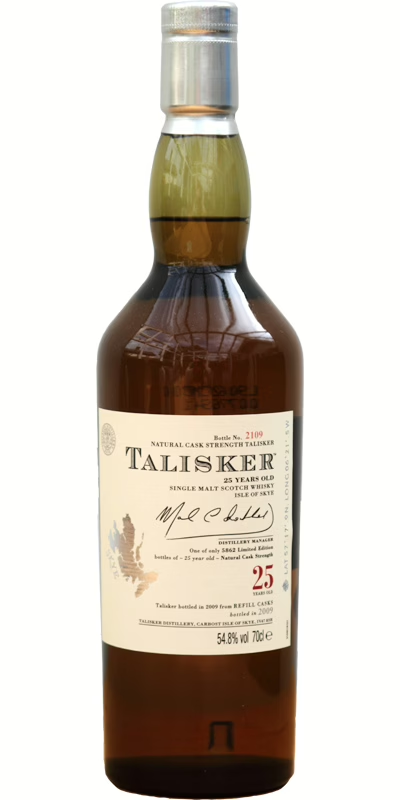
Colour:
Deep gold.
Nose:
Neat: The nose is immediately deeply maritime and remarkably fresh for its age. It opens with a potent, bracing aroma of sea brine, salty seaweed, and a gentle, lazy peat smoke. As the coastal intensity settles, bright, zesty notes of lemon peel, orange, and even passion fruit begin to emerge. The extended maturation provides a lovely, complex backbone of linseed oil, dry oak, and subtle hints of cigar box.
With water: Adding a few drops of water elevates the citrus and floral elements. The sharp brine softens into an earthier aroma, allowing sweeter notes of vanilla, toasted almonds, and a touch of marzipan to step forward from behind the dry wood smoke.
Palate:
Neat: The palate is famously intense,quite more than the shyer nose. At 54.8% ABV, the texture is remarkably oily, waxy, and powerful. It arrives with the trademark hit of Talisker black pepper. This intense chili-spice is quickly followed by sweeter, earthy notes of rich peat, sweet liquorice, and an excellent, mouth-watering combination of lemon and rock salt. The oak influence introduces sophisticated, slightly bitter notes reminiscent of dark cappuccino.
With water: Dilution transforms the thick, waxy texture into a silkier mouthfeel. The pepper mellows, allowing the sweet citrus and vanilla to integrate beautifully with the savoury, medicinal peat and sea salt, with melted dark chocolate appearing, resulting in a much rounder palate.
Finish:
The finish is medium-to-long, warming, and resolutely coastal. It begins with a slightly bitter, organic, and woody onset before transitioning back into a lingering, savoury memory of sea salt, dry seaweed, and a final whisper of earthy peat smoke.
Comments:
Once again, the Talisker 25-year-old Special Release really is delicious, if not slightly simpler than the 2007 and 2006 releases. But overall, another stunning whisky, which unfortunately became quite expensive, way too much for us to be able to enjoy any of these regularly.
Rating: 8.5/10
And now, our 1000th spirit reviewed on More Drams Less Drama!
Review #1000: Talisker 1954 Gordon & Macphail Review
This Talisker 1954 is an exceptionally rare, historic vintage single malt bottled by Gordon & MacPhail (G&M). During this era, G&M held the official licence to bottle Talisker, doing so under their famous ‘Distillery Label’ series, which featured a distinctive black label adorned with a large, golden eagle. It was probably bottled in the 1990s, as the bottle size is 70 cl, and Europe switched to that format on the 1st of January 1990. It was bottled at the standard UK strength of that era: 40% ABV, or 70 UK proof. It is, of course, extremely rare and highly prized by collectors and enthusiasts. When it appears at auction, you’ll probably have to pay around €1600 to get a bottle.
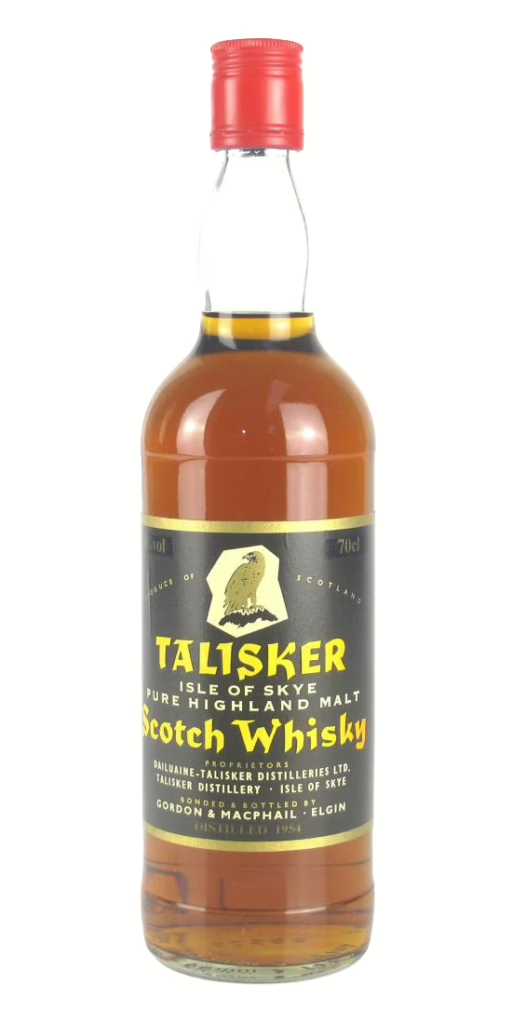
Colour:
Tawny.
Nose:
Neat: The nose offers a profile that is entirely incomparable to modern Talisker. It opens with an astonishing, lush fruitiness, featuring a delicious cocktail of fresh, overripe exotic fruits. The classic peat and maritime aromas are extremely shy, if present at all. After probably 30 years in the glass, some OBE has developped, with old lamp oil, camphor, old tar ropes, and an end-of-the-19th-century industrial harbour (that’s, of course, how I can imagine it). It evokes the smell of heavy sailor raincoats and cold sea salt. Beneath this sits a slight iodine note (like burning disinfectant) and a sweet hint of candied orange peel.
Palate:
Neat: Despite the low 40% ABV (that I measured to be in fact down to about 35% ABV…), the mouthfeel is surprisingly fat, impressive, and very oily, coating the mouth in a creamy, silky texture. The palate is beautifully layered. On one side, there is a soft, sweet fruitiness (brown sugar, dates, and orange juice). On the other side, there is an interesting interplay of bitter waxes, herbs, and a savoury, salty vanilla cream. The smoke is incredibly restrained—reminiscent of catching a faint whiff of a coal stove being lit in another room. The signature Talisker pepper is here, softer than usual, and complemented by a deep, dirty, intense ‘lamp oil’ and tar-rope character that sticks to the teeth and gums.
Finish:
The finish is long and delicate. It leaves a lingering, heavily waxy texture on the palate, which slowly vanishes. There are no astringent or bitter notes until the very end. The intense, dirty, industrial harbor notes and sweet orange oil linger for a long time.
Comments:
I am so glad I selected this dram to be the 1000th spirit reviewed on More Drams. The nose of this Talisker 1954 from Gordon & Macphail is nothing less than astonishing. Its elegance, complexity, fruitiness and all the signs of old whisky make it unbelievable complex, while keeping the Talisker markers, just in an old-time fashion. Especially when nosed using a 1920 Blender’s glass, helping the power to stay despite the low ABV. The nose is fragile and loses steam after about 15–20 minutes, so unfortunately, you cannot smell it for hours after pouring it. The risk of old whiskies bottled at 40%. The palate and finish are slightly weaker because of how the ABV, but absolutely splendid as well, something you immediately regret having just 20 ml, as you would want to spend days and days on it, get back to it, and see what you can pick from the nose, palate and finish. A perfect way to celebrate such a milestone for More Drams Less Drama.
Rating: 9.5/10
Many thanks Juju and Julian!