Walnuts, mushrooms, old leather and the chemistry behind one of Cognac’s most mysterious characteristics.
There are a few words that seem almost compulsory when describing very old Cognac. Rancio is one of them.
Open a sufficiently old Grande Champagne, find some walnuts, mushrooms, leather or old furniture on the nose, and sooner or later somebody will mention rancio Charentais. Preferably with a suitably reverential expression.
And I understand why. Some of the most extraordinary Cognacs I’ve tasted have displayed precisely those characteristics. That combination of old wood, dried fruit, earthy notes, nuts and remarkable aromatic complexity can be fascinating.
But what exactly is rancio? Is it a particular aroma? A collection of aromas? A chemical reaction? A stage of maturation? Something that only appears after several decades in oak? And perhaps more importantly, are we sometimes using the word simply because the Cognac is old and expensive?
Let’s investigate.
First, what is rancio?
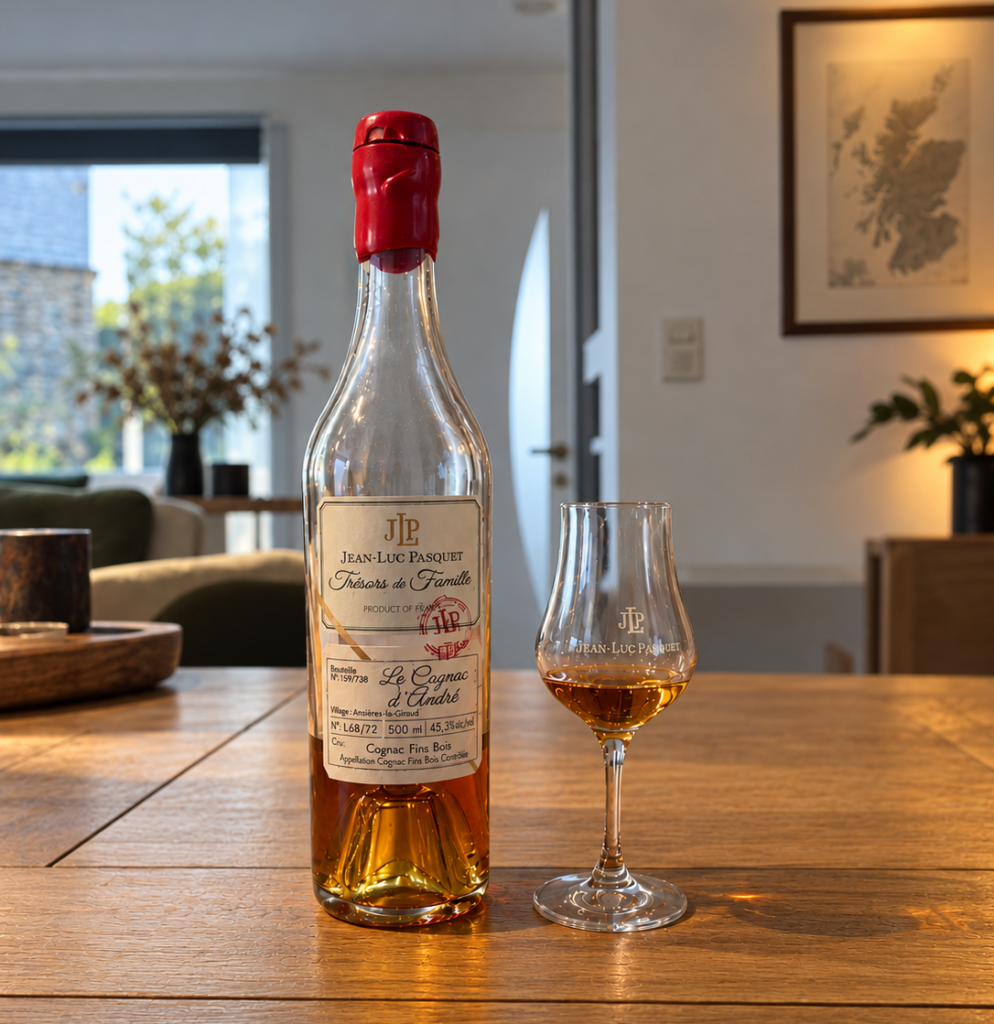
The expression generally used in Cognac is rancio Charentais. It describes a complex family of aromas and flavours associated with the maturation of Cognac, particularly older eaux-de-vie.
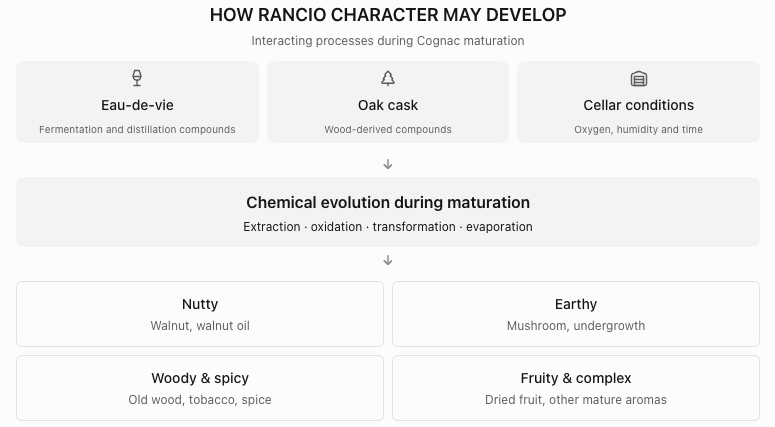
Descriptions commonly include walnuts, walnut oil, mushrooms, undergrowth, dried fruits, leather, tobacco, old wood and sometimes more unusual savoury or oxidative characteristics. The French tourism organisation Destination Cognac, for example, describes rancio through mushrooms, damp undergrowth and walnut oil.
Those are useful reference points, but they are not a chemical definition. Rancio isn’t a compound that we can simply measure in a laboratory and declare present or absent. It is a sensory description applied to a collection of characteristics, and different people may use it for somewhat different combinations of aromas.
That’s the first complication. When two tasters describe a Cognac as having rancio, they may not be describing precisely the same thing.
Is rancio just another word for old?
No. Although the two have become rather closely associated.
Long maturation in oak provides conditions under which the characteristics we associate with rancio can develop. But age alone doesn’t guarantee a particular aromatic profile. Two eaux-de-vie distilled in the same year can evolve differently depending on their initial composition, casks, cellar conditions and maturation history.
One may develop pronounced nutty and earthy characteristics. Another may remain surprisingly fruity and floral. A third may become excessively woody. They are all old, but they don’t necessarily display the same degree, or style, of rancio.
This is particularly important when discussing exceptionally old Cognac. If we use rancio as a synonym for age, the term stops telling us anything useful about the actual liquid. And if we use it as a synonym for quality, things become even worse.
Where does rancio come from?
Here the answer becomes more interesting.
Cognac maturation involves several processes operating simultaneously. The eau-de-vie extracts compounds from oak, existing compounds undergo chemical transformations, oxygen participates in reactions, and volatile substances evaporate. The balance between alcohol, water and aromatic compounds evolves throughout maturation.
The spirit itself already contains a complex mixture of substances originating from grapes, fermentation and distillation. Some compounds associated with mature aromas are extracted from the wood, others may be formed through reactions involving compounds already present in the eau-de-vie, and still others may result from interactions between the two.
This means we should be careful with the popular explanation that rancio is simply the flavour of very old oak. Oak matters enormously, but the liquid entering that oak matters too.
The chemistry: what do we actually know?
There is some useful scientific research here.
In 2003, Vivian Watts and Christian Butzke published a study examining methyl ketones in commercial Cognacs of different ages. They investigated four odd-numbered methyl ketones associated, at least in part, with the complex sensory character described as rancio Charentais.
This is interesting because it moves the discussion beyond purely romantic tasting descriptions. There are identifiable chemical compounds associated with aspects of rancio. But notice the qualification: associated with aspects of rancio, not responsible for everything we call rancio.
The study did not establish a single chemical fingerprint that could account for the entire sensory phenomenon. Nor should we assume that detecting one of these compounds proves a Cognac will display the full aromatic character associated with mature rancio.
Aroma perception is considerably more complicated than that.
What are methyl ketones?
Without turning this into an organic chemistry lecture, ketones are a family of compounds characterised by a particular chemical structure. Some methyl ketones have aromas that can be described as fatty, fruity, floral, mushroom-like or otherwise distinctive, depending on the compound and its concentration.
Their sensory impact also depends on the surrounding mixture. The same compound can contribute differently depending on what else is present, and its mere presence doesn’t mean we will necessarily perceive it.
The 2003 Cognac study is particularly interesting because it examined the relationship between certain methyl ketones and Cognac age. The authors also discussed a possible mechanism involving the transformation of fatty acids through oxidative reactions.
That provides a plausible chemical pathway for some characteristics associated with rancio. But it doesn’t mean that all rancio is produced through one simple oxidation reaction, or that the longer you leave a Cognac in oak, the more of every desirable rancio aroma it will inevitably develop.
Maturation chemistry rarely offers such convenient guarantees.
What about oxidation?
Oxidation is frequently invoked to explain rancio, and understandably so. Oxygen participates in the evolution of many aged beverages, including wines and spirits, and oxidative processes can contribute to the development or transformation of aromatic compounds.
But oxidation is not synonymous with rancio.
Oxidation describes a broad category of chemical reactions. Some may contribute desirable complexity, while others may produce characteristics we consider undesirable. And many changes during maturation are not adequately explained by oxidation alone.
There are extraction processes, reactions involving acids and alcohols, changes in volatile composition and numerous interactions between compounds. The familiar distinction between oxidative and reductive conditions is also more complicated in a cask than it may first appear.
So when someone says that rancio develops because Cognac oxidises in oak, I would regard that as a useful starting point, not a complete explanation.
Does rancio come from the wood or the spirit?
Both can contribute, and separating their respective roles is difficult.
The wood supplies compounds that influence aroma, colour and mouthfeel. The spirit brings its own chemical composition, determined by grapes, fermentation and distillation.
A 2024 study of Charentais distillation examined the behaviour of dozens of aromatic compounds and showed that distillation itself can form or transform important aroma molecules.
In other words, Cognac doesn’t enter the cask as an aromatically empty liquid waiting for oak to give it character. It already contains a substantial part of the chemical foundation from which its later aromatic profile will develop.
That doesn’t establish a direct pathway from any particular distillation choice to rancio. But it reminds us why the maturation process cannot be understood by looking at the wood alone. Two different eaux-de-vie placed in apparently similar casks may evolve in very different directions.
The famous four stages of rancio
If you’ve read enough Cognac articles, you’ve probably encountered a description of four stages of rancio.
The usual progression goes something like this. First, floral and nutty notes. Then richer spices, dried fruits and more pronounced oxidative characteristics. Later, tobacco, leather, old wood and increasingly complex aromas. Finally, in exceptionally old Cognac, exotic fruits, sandalwood and other unusual characteristics.
These stages are sometimes associated with age ranges extending from approximately ten years to fifty years or more. It’s an attractive model. Perhaps a little too attractive, because it gives the impression that rancio develops according to a predictable timetable.
Ten years: stage one. Twenty years: stage two. Forty years: stage three. Fifty years: congratulations, you’ve unlocked tropical fruit.
Unfortunately, Cognac doesn’t mature like a video game.
The four-stage description can be a useful traditional framework for communicating how mature aromas may evolve. But I would not treat it as a scientifically validated, universally applicable maturation sequence.
Different eaux-de-vie evolve differently, and assigning a particular aroma to a precise age range is considerably more speculative than the tidy diagram might suggest.
Why walnuts, mushrooms and old furniture?
This is where sensory language becomes both useful and frustrating.
When I write walnut oil, I am describing a perceived resemblance. I am not claiming that the Cognac contains walnut oil. When I describe old furniture, I am trying to communicate a combination of woody, waxy, dusty or polished characteristics. I am not identifying a specific molecule called old furniture.
And when somebody writes forest floor, that may evoke damp earth, mushrooms, decaying leaves or other related impressions.
These descriptors can be remarkably effective between people who have experienced similar aromas. But they aren’t precise analytical measurements, and rancio is particularly vulnerable to this problem because the term itself already groups several different sensory impressions together.
Two Cognacs might both display rancio while sharing surprisingly few specific tasting descriptors. One might be dominated by walnuts and mushrooms, another by leather, tobacco and dried fruits, and a third by more savoury, oxidative characteristics.
Calling all three rancio may be reasonable. But it doesn’t make them identical.
Can rancio appear in relatively young Cognac?
Potentially, at least in the sense that some individual characteristics associated with rancio can appear before a Cognac becomes exceptionally old.
Nutty aromas aren’t exclusive to fifty-year-old Cognac, nor are mushroom-like, woody or oxidative notes. The question is whether the complete, complex character traditionally described as rancio Charentais has developed.
And there isn’t a universally accepted sensory threshold at which we can declare that transformation complete. Some traditional descriptions suggest that the earliest stages begin after roughly a decade in oak, but I wouldn’t turn that into a rule.
Age is relevant. It isn’t a diagnostic test.
Is rancio exclusive to Cognac?
No. And this is where the terminology becomes particularly interesting.
The word rancio is also used in discussions of oxidative wine styles and other aged beverages. Rancio wines, certain fortified wines and some old spirits can display related nutty, savoury and oxidative characteristics.
That doesn’t mean they are chemically or sensorially identical. Nor does it mean that every old whisky displaying walnuts and leather should automatically be described as having rancio Charentais.
The expression rancio Charentais belongs to a particular Cognac tasting tradition, but the broader aromatic phenomena are not magically confined to the geographical boundaries of the Cognac appellation.
Which shouldn’t surprise anybody. Chemistry has never been particularly respectful of appellation boundaries.
And what about whisky?
This is where I find the comparison especially interesting.
I’ve tasted old whiskies displaying walnuts, old leather, polished wood, tobacco, mushrooms and other characteristics that would feel entirely at home in a description of rancio.
Some very old sherried whiskies can show pronounced nutty and oxidative notes. Certain old refill-cask whiskies develop complex waxy, herbal, earthy or savoury characteristics. And some exceptionally old whiskies retain extraordinary tropical fruitiness.
But does that mean they have developed rancio?
It depends on what we mean by the term. If we’re using rancio loosely to describe a family of mature, nutty, oxidative characteristics, there can certainly be similarities. If we’re claiming that those whiskies have undergone exactly the same chemical transformations as old Cognac, we would need much stronger evidence.
The raw materials, fermentation, distillation and maturation conditions are different. Similar sensory impressions do not necessarily imply identical chemical origins.
That’s worth remembering when comparing spirits.
Is more rancio necessarily better?
Absolutely not. This may be the most important point in the entire article.
A Cognac can have pronounced rancio and be magnificent. It can also have pronounced mature, oxidative characteristics while lacking freshness, balance or complexity. And a Cognac with relatively little obvious rancio can still be extraordinary.
I don’t want every old Cognac to taste of walnuts, mushrooms and leather. Sometimes (well, if you know me, you know it’s almost always) I want fruit. Sometimes I want flowers. Sometimes I want freshness, citrus, spice or a beautifully integrated combination of all those things.
The presence of rancio is not a substitute for balance, nor is its intensity a quality score. A heavily rancio-driven Cognac may be exactly what one drinker wants, while another may prefer something fruitier and more vibrant.
Neither is automatically wrong.
Some old Cognacs are remarkably fresh
One of the things I find most fascinating about old Cognac is how much freshness some examples retain.
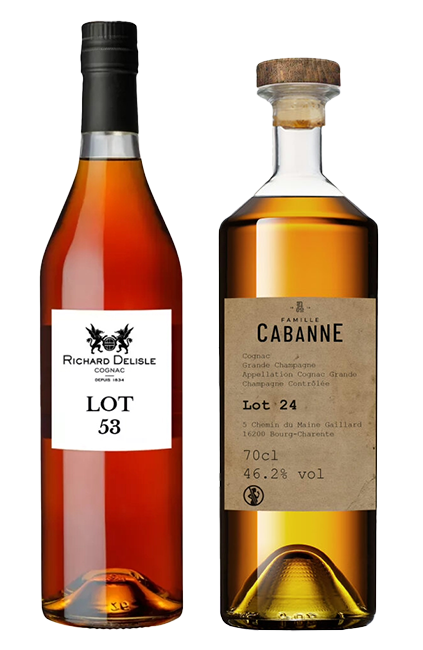
My Famille Cabanne Lot 24, distilled in 1924, is a particularly striking example of how an extremely old eau-de-vie can remain compelling rather than simply becoming an exercise in old wood. And my Richard Delisle Lot 53 Grande Champagne was among the finest Cognacs I’ve tasted.
But I would be careful about using either bottle as proof of a particular theory about rancio. A tasting note tells us what we perceived. It doesn’t establish which chemical processes produced those perceptions.
And without complete maturation histories, we cannot reliably attribute every characteristic to a particular number of years in oak, cellar humidity or cask treatment.
What these bottles do demonstrate is something more fundamental: great old Cognac is not defined by the intensity of one aroma family. It is defined by how its many characteristics work together.
Does the cru influence rancio?
This is another tempting question.
Grande Champagne has a reputation for producing eaux-de-vie suited to very long maturation. Borderies are often associated with distinctive floral characteristics, while Fins Bois can be particularly expressive and approachable.
It would be tempting to build a theory in which one cru develops more rancio, another develops it earlier, and a third produces a completely different style.
But the evidence required to establish those relationships rigorously is substantial. We would need to account for grape composition, fermentation, distillation, oak, cellar conditions, blending and age.
Simply comparing a few old bottles from different crus wouldn’t isolate the effect of geography. That doesn’t mean cru is irrelevant. It means the relationship between terroir and rancio is more complicated than a simple ranking.
And, as I argued in the Cognac-label article, the crus aren’t a legal hierarchy of quality in the first place.
What about cellar humidity?
Humid and dry cellars can influence the evolution of Cognac. They affect evaporation and the relative loss of alcohol and water. Over long periods, those differences can produce distinct maturation trajectories.
But it’s easy to take the next step too confidently.
For example, humid cellars create better rancio, or dry cellars produce more intense rancio. Those are much stronger claims than the basic observation that cellar conditions affect maturation.
To establish them, we’d need evidence connecting particular conditions to specific chemical and sensory outcomes, while controlling for the other variables.
So I’d rather say that cellar conditions can influence the development of mature Cognac character. The precise effect on what we call rancio is a more complicated question.
Does rancio keep developing in a demijohn?
Here’s another distinction worth making.
Cognac producers may transfer mature eaux-de-vie from oak into glass demijohns. This is commonly done to preserve a desired state of maturation and avoid excessive extraction from wood.
Glass storage is not equivalent to continued oak maturation. The eau-de-vie is no longer interacting with the cask in the same way.
That doesn’t necessarily mean its chemical composition is frozen absolutely forever. Storage conditions, closures and time may still matter. But we shouldn’t assume that a Cognac continues developing rancio in glass at the same rate, or through the same processes, as it would in oak.
A Cognac distilled in 1950 and transferred to glass in 1980 has a very different maturation history from one that remained in oak until 2020, even if both were bottled in 2025.
This is why the age and maturation history of exceptionally old Cognacs deserve a separate article.
So how should we use the word?
I don’t think we should stop using rancio. It’s a useful term, and it describes a recognisable family of characteristics that can be difficult to communicate with one or two ordinary tasting descriptors.
But I’d like to see it used more precisely.
If I describe a Cognac as having pronounced rancio, I should ideally explain what I mean. Walnut oil? Mushrooms? Leather? Old wood? Tobacco? Savoury oxidative notes? A combination of several of those?
That tells the reader considerably more than simply writing magnificent rancio, which is enthusiastic but not especially informative.
I’d also avoid treating rancio as proof of great age or superior quality. It may be consistent with long maturation, and it may contribute to extraordinary complexity, but neither conclusion follows automatically from the word itself.
The problem with romantic vocabulary
Whisky and Cognac tasting have plenty of romantic terminology.
Waxy. Mineral. Maritime. Farmyard. Rancio.
Some of these terms are useful precisely because they compress complex sensory experiences into familiar shorthand. But they also create opportunities for us to sound more certain than we really are.
If I say that a Cognac displays rancio because it spent fifty years in oak, I’m making a causal claim. If I say that it displays aromas of walnut oil, mushrooms and old leather, I’m reporting a sensory impression.
Those are different statements. The first requires evidence about the maturation history and the mechanisms involved. The second requires only that I describe what I perceive as accurately as possible.
And perhaps that is the best way to approach rancio. Not as a mystical property that old Cognac eventually acquires, and not as a badge of quality, but as a useful, if somewhat imprecise, way of describing a complex set of aromas that can emerge during maturation.
Too long, didn’t read
(Yes, of course, rancio gets a TL;DR too.)
Rancio Charentais describes a family of mature aromas and flavours associated with Cognac, including walnuts, mushrooms, undergrowth, leather, tobacco and other complex characteristics. It is not one specific aroma molecule.
Scientific research has identified compounds, including certain methyl ketones, associated with aspects of rancio. But there is no simple chemical test that captures everything tasters mean by the word.
Long maturation in oak can favour the development of these characteristics, but age alone does not guarantee them. The frequently repeated four stages of rancio are best treated as a traditional descriptive framework, not a universal scientific timetable.
Rancio is not exclusive to Cognac in the broad sensory sense, although rancio Charentais belongs to Cognac’s own tasting vocabulary.
And most importantly, more rancio does not automatically mean better Cognac. A magnificent old Cognac may have pronounced rancio, or it may be magnificent because of its fruit, freshness, balance or complexity.
The useful question isn’t simply whether a Cognac has rancio. It’s what the word is actually describing in that particular glass.
Conclusion: perhaps we should describe what we smell.
I’m not proposing that we ban the word rancio from tasting notes. That would be rather inconvenient, and I’d probably be among the first people to break the rule.
But I do think we should be more careful with it.
If an old Cognac smells of walnuts, mushrooms, leather and polished furniture, those are interesting observations. If those characteristics combine into something I recognise as rancio Charentais, the term can be useful. But it shouldn’t replace the description, and it certainly shouldn’t replace an assessment of the Cognac itself.
Because ultimately, I don’t drink old Cognac to find the maximum possible quantity of rancio. I drink it to discover what decades of production, maturation and human decisions have created.
Sometimes that’s walnuts and mushrooms. Sometimes it’s extraordinary tropical fruits. Sometimes it’s something I struggle to put into words. And sometimes it’s a combination so remarkable that I stop worrying about the vocabulary altogether.
Which is probably when the Cognac is at its best.
References and further reading
- Watts, V. A. & Butzke, C. E. (2003). Analysis of microvolatiles in brandy: relationship between methylketone concentration and Cognac age. Journal of the Science of Food and Agriculture. DOI: 10.1002/jsfa.1516.
- Charentaise distillation of Cognac: Behavior of aroma compounds (2024). Food Research International. DOI: 10.1016/j.foodres.2024.113977.
- More Drams Less Drama – What Is Cognac?