After a short break in Wick, we’re back to the series on older blends – following part one and part two – with three more bottles from past decades. Today’s lineup includes two blends from the 1960s: Passport and House of Lords, followed by a more recent Talisman, bottled sometime in the 1990s or early 2000s.
Passport Scotch Blend (1960s) Review
Passport is a mass-market blended Scotch whisky created by Seagram and now produced under William Longmore & Co. Ltd, part of the Pernod Ricard/Chivas Brothers portfolio, with roots dating back to the 1960s. According to Pernod Ricard, Passport blends flavourful Highland and Speyside single malts – reportedly including Glen Keith – with lighter, sweeter Lowland grain whiskies, all sourced from Seagram’s former Speyside distilleries. It carries no age statement, has caramel colouring (E-150) added, and is chill-filtered.
Notably, this brand’s production and bottling arrangement varies significantly by market: whisky matured in Scotland under William Longmore & Co. control has historically been shipped in bulk to Brazil, where it is bottled and diluted with local mineral water by Pernod Ricard’s Pernambuco plant – meaning Scottish-bottled and Brazilian-bottled Passport are effectively two distinct products with different characters, despite sharing a name. Whiskybase catalogues an unusually large number of separate Passport listings – spanning bottle sizes from 48 ml miniatures to 1750 ml bottles and ABVs at either 40% or 43% (or their British or American proof equivalent) – reflecting decades of market-specific variation without a single standardised bottling. Bottles still sometimes appear at auction and definitely won’t ruin you; they usually go for £20 or even less, even a 1960s bottle, before fees.
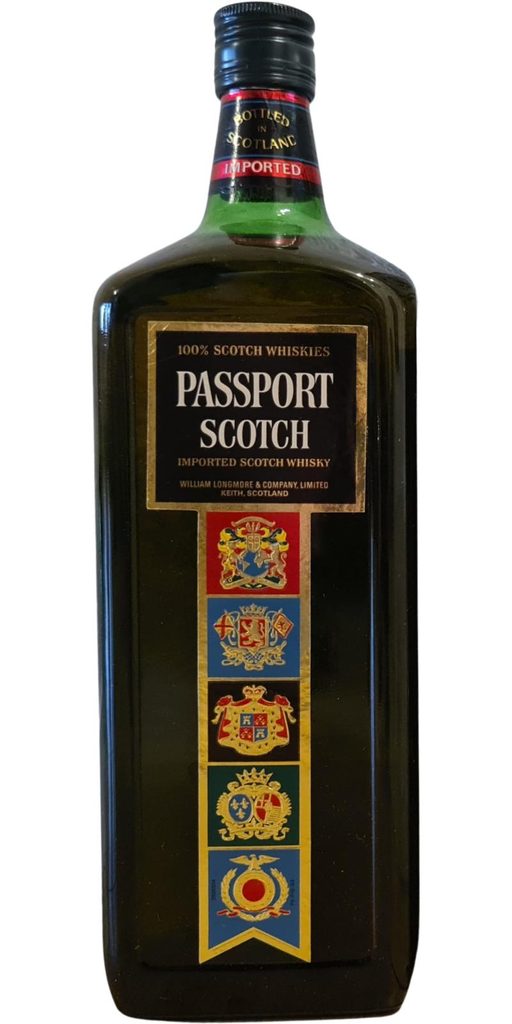
Colour:
Burnished.
Nose:
Neat: The nose is immediately harsh and alcohol-forward, despite the ABV being probably very low. Bread dough, nut shells, wood, and faint citrus, plus an unpleasant smell somewhere in between baby puke and rotten fruit peels. Once you succeed in going past these first off notes, you can find pears and some sulfur.
Palate:
Neat: The palate is sharp and slightly burning, with oaky bitterness and little redeeming character. Grainy sweetness, aspartame, hints of vanilla, it’s flat and overly grainy at the same time.
Finish:
A light smoky sweetness persists for a few seconds, with a pinch of pepper and some more aspartame.
Comments:
The nose is extremely grainy; the grainiest of the blends tasted so far in this series. The palate is flat in terms of taste, but sharp and grainy at the same time, with a cloying aspartame sweetness. The only positive is that the finish is not too long. This passport should be revoked immediately and denied entry in any country, but it does manage to be less bad than a Label 5 or a William Peel…
Rating: 2/10
House of Lords Blended Scotch (early 1960s) Review
House of Lords is a blended Scotch whisky created by William Whiteley & Co. (headquartered in Pitlochry, not to be mistaken by the Mauritian brand of the same name), one of the company’s two signature blends alongside King’s Ransom, and was long known as a favorite of Winston Churchill. William Whiteley himself was noted as one of the whisky industry’s more colourful characters, and the House of Lords was controversially named after the upper house of the British Parliament – a naming choice that drew enough protest domestically that the brand was restricted to export markets only until 1996. Whiskybase catalogues an exact bottling matching this description as ‘House of Lords The Original,’ bottled in 1960, at 43.2% ABV in a 757 ml bottle – an unusual, non-standard volume consistent with mid-century export bottlings aimed at markets using imperial rather than metric measures. Expect to pay less than £40 at auction for a bottle, be it the NAS, the 8-year-old or the 12-year-old, all from the 1960s. There is a current House of Lords Single Malt Scotch Whisky sold through the UK Parliament shop, but it is a different product and should not be confused with the former William Whiteley blended whisky.
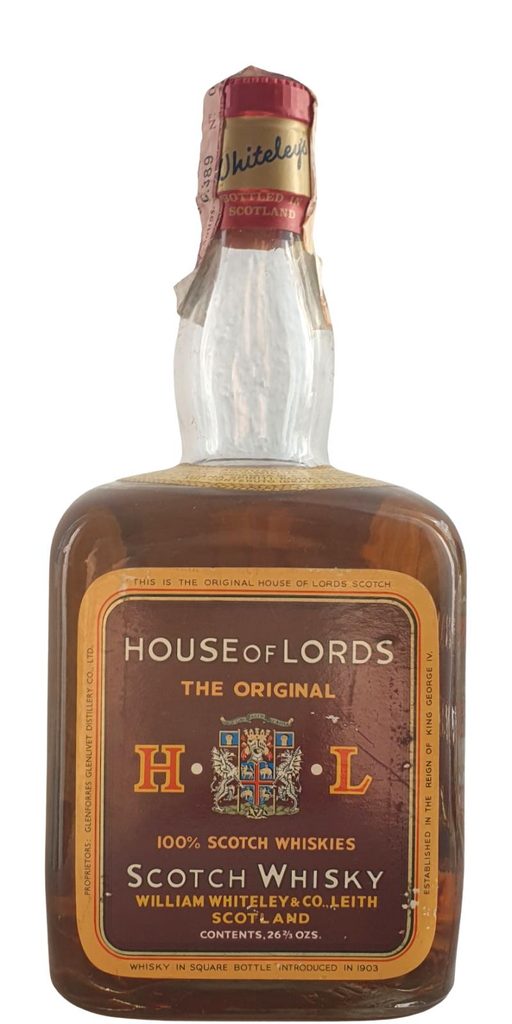
Colour:
Russet.
Nose:
Neat: The nose is way deeper and richer than the Passport and the Talisman. It starts on camphor and eucalyptus, giving it a medicinal side, with a nice mentholated sweetness of Vichy lozenges and hints of liquorice.
Palate:
Neat: The palate is velvety and bitter at first, with a short heat from spices. Blood oranges, dark chocolate, oak spices, pepper, and brown sugar, it is grainy but not as much as the the Passport. Jammy figs, dark caramel, and cough syrup.
Finish:
The finish is long, with cough syrup, bitter oak, ashtray and leafy notes, with an underlying sweetness.
Comments:
Way, way better than the Passport (and the Talisman below), without being exceptional, but it shows character, good aromas and flavours, including some we don’t see that often, with a nice medicinal and sweet nose and a darker palate.
Rating: 6/10
The Talisman Finest Blended Scotch Whisky (1990s or early 2000s) Review
The Talisman is a value-tier blended Scotch produced by J & W. Hardie Ltd and bottled by the Tomatin Distillery Company, drawing its name from Sir Walter Scott’s novel of the same title. The blend leans heavily on malt whiskies from the Speyside region, giving it a comparatively soft, malt-forward character relative to typical bottom-shelf blends, matured in oak casks. It carries no age statement, is chill-filtered, and has caramel colouring added to achieve its pale amber to straw hue.
Bottled at 40% ABV, Whiskybase catalogues several distinct ‘Talisman’ and ‘Talisman Finest’ listings across 350 ml, 700 ml, and 1000 ml formats. They appear very rarely on auction, your best chance will be with miniatures, for just a few pounds.
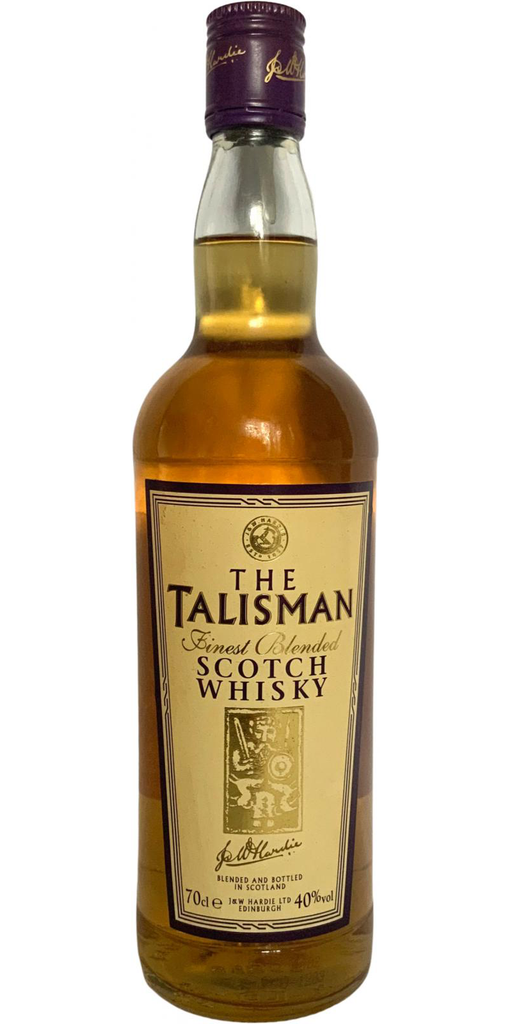
Colour:
Pale gold.
Nose:
Neat: The nose is very soft, with vanilla and orange, with a brief whiff of smoke and earthy peat that quickly recedes into sweet grain, apples, ginger, and honey.
Palate:
Neat: The palate starts with flowery honey and slightly malty sweetness, with a surprising salted-caramel flavour. However, it mostly shows a thinner delivery of sweet grain and bitter refill wood, and an excessive sweetness that could become cloying after a few sips. Maybe hints of smoke?
Finish:
The finish is thin, short, and increasingly metallic and grainy, though rescued somewhat by a late reappearance of smoke.
Comments:
The nose lacks intensity and character. The palate manages to be too sweet and too bitter at the same time, and, fortunately, the finish is short and maybe the best part of this whisky anyway. Less awful than the Passport, so let’s raise the rating to 3.